Identifying Common Cockroach Species In Australia, Port Macquarie Pest Control
There are many different species of cockroach Australia wide, with some that can be difficult to identify. This article covers many common species you may find in your home in Port Macquarie, and information on pest control options.
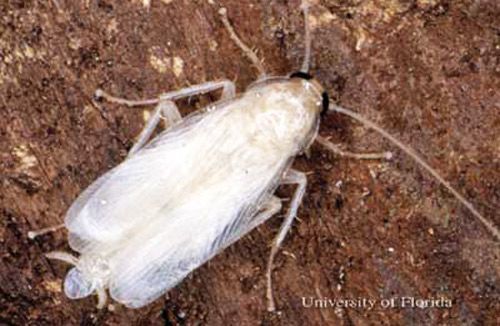
A German cockroach freshly molted. Source: Pest help
Table of Contents
- Summary
- Australian Cockroach
- Banded (Brown-Banded) Cockroach
- American Cockroach
- Smoky Brown Cockroach
- German Cockroach
- Safety And Health Risks
- Prevention Strategies
- Pest Control Approaches
- Why Pest Control In Port Macquarie Is Important
- German Cockroach: A Closer Look
- Practical Tips For Property Owners In Port Macquarie
- Choosing The Right Pest Controller In Port Macquarie
- Conclusion
- References
Summary
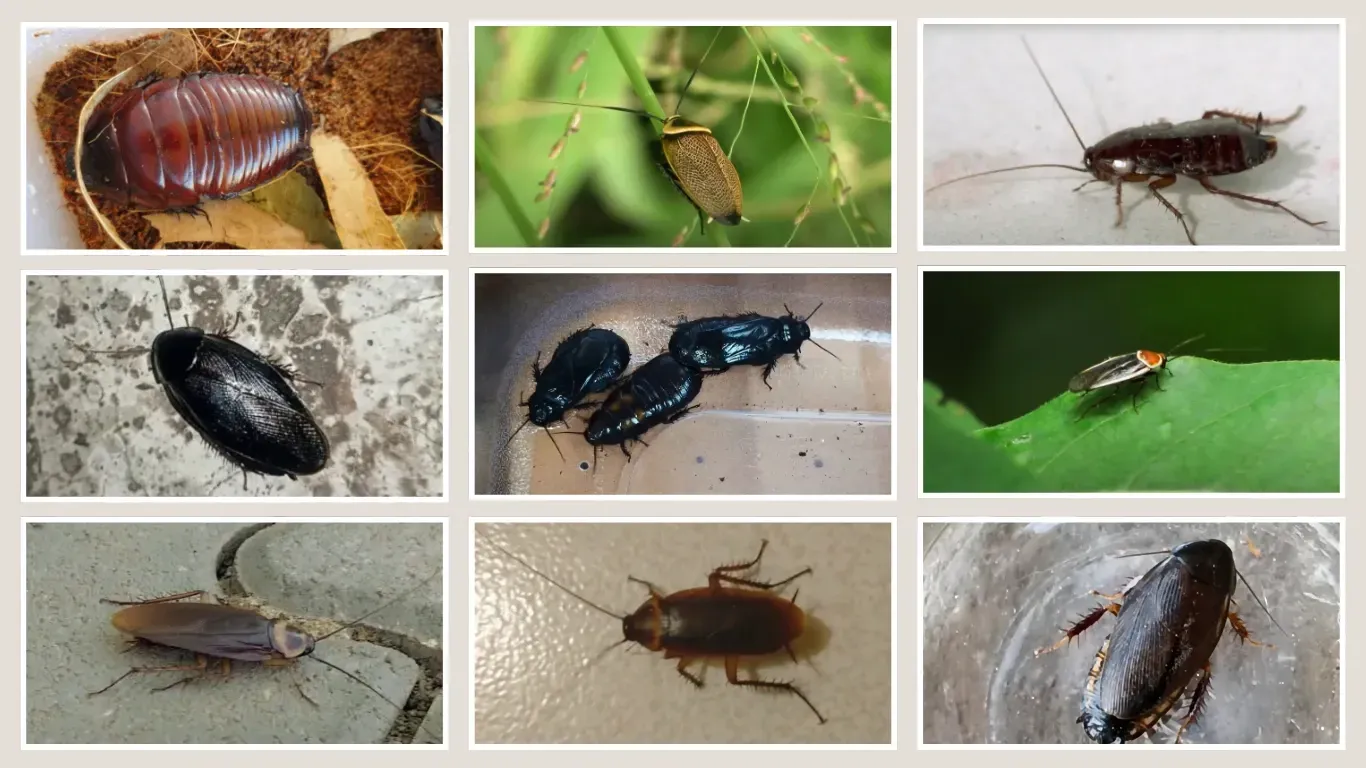
Example of different cockroach species found in Australia - Source: Spiderzoon
Cockroaches are among the most disliked and persistent pests in homes, farms, and commercial premises across Australia. Not only are they unsightly, but they can also pose serious health risks and are notoriously difficult to eliminate once they gain a foothold. Understanding the common species found in Australia — their biology, behaviour, and habitats — is the first step toward effective control.
In this post, we’ll explore five major cockroach pests in Australia — the Australian cockroach, banded (brown-banded) cockroach, American cockroach, German cockroach and smoky brown cockroach. We’ll examine their appearance, where they live, how infestations start, the risks they bring, and practical prevention and pest-control strategies — particularly relevant for those in Port Macquarie and similar Australian regions.
Key Points:
- Each species has distinct appearance traits, life cycles, and habitat preferences.
- They commonly infest homes, farms, and commercial sites via cracks, crevices, clutter, water leaks, cardboard, and warm moist areas.
- Cockroaches often originate in subfloor voids, roof cavities, garages or outdoor mulch, but migrate into kitchens, cupboards, and living spaces.
- Cockroaches pose health risks by spreading disease, including transmission of Salmonella, Shigella (dysentery), E. coli, as well as triggering asthma and allergies.
- Prevention involves improving/maintaining hygiene, cleaning (including outdoor bins), clutter reduction, moisture control, and structural proofing.
- Effective pest control often requires professional intervention using targeted chemical treatments (dusts, gels, IGRs) and integrated pest management — especially when clients don’t address underlying causes like leaks or clutter.
- German cockroaches are particularly challenging to eradicate due to high reproduction, resistance potential, and their ability to infest electronics.
Common Cockroach Species in Australia
Australian Cockroach
(Periplaneta australasiae)
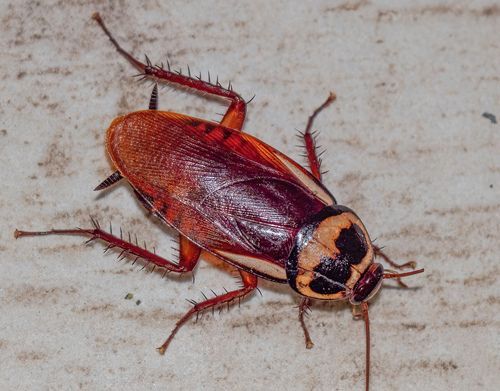
Close-up of Australian cockroach. Distinctive pale-yellow margins clearly visible. - Yoshimoto, J., Cano, EB, Orellana, S. (2018).
Appearance (adult vs juvenile):
Adult Australian cockroaches are large — around
30–35 mm in length — with dark brown bodies and distinctive yellow or pale-yellow margins around the pronotum and along the forewings.¹⁶,¹⁷ Nymphs lack wings; early instars are plain brown, while later instars develop bright yellow spots along the edges of their abdomens that resemble the adult’s markings.¹⁷
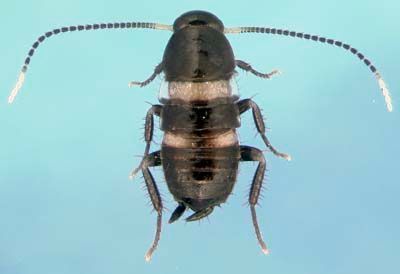
Australian cockroach, Periplaneta australasiae, 7-day-old nymph (dorsal view). C. Montero, University of Florida)
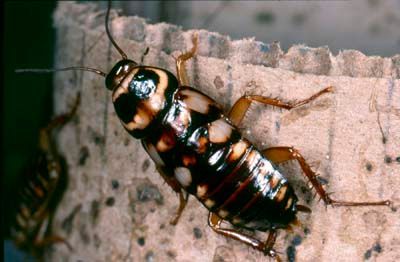
Australian cockroach, Periplaneta australasiae, late-instar nymph and fecal smears. Photographer: L.J. Buss, University of Florida
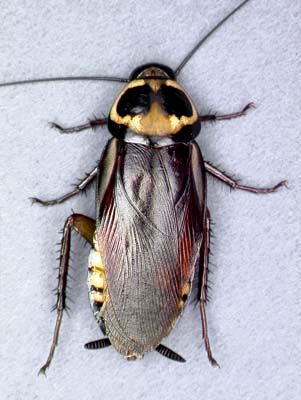
Adult Australian cockroach, Periplaneta australasiae. R.W. Baldwin, University of Florida
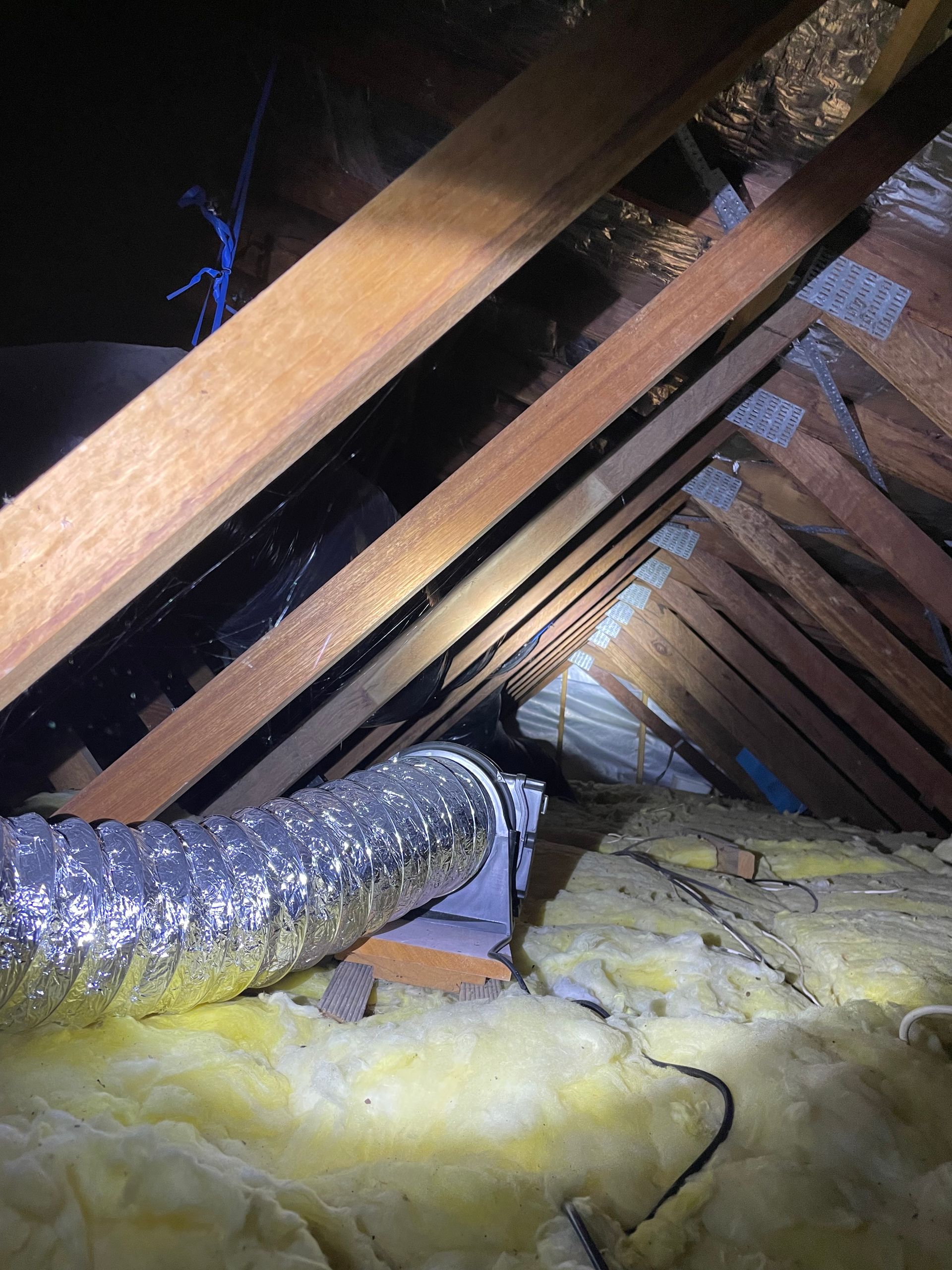
Where they originate / migrate from: While often seen inside homes — particularly in kitchen cupboards or around food storage — many infestations actually originate outside or in structural voids. They commonly live in subfloor spaces, roof cavities, under-house storage, and garages, especially in warm, humid regions. From these harbourage sites, they migrate into interior living areas in search of food and water.¹³,¹⁶,¹¹
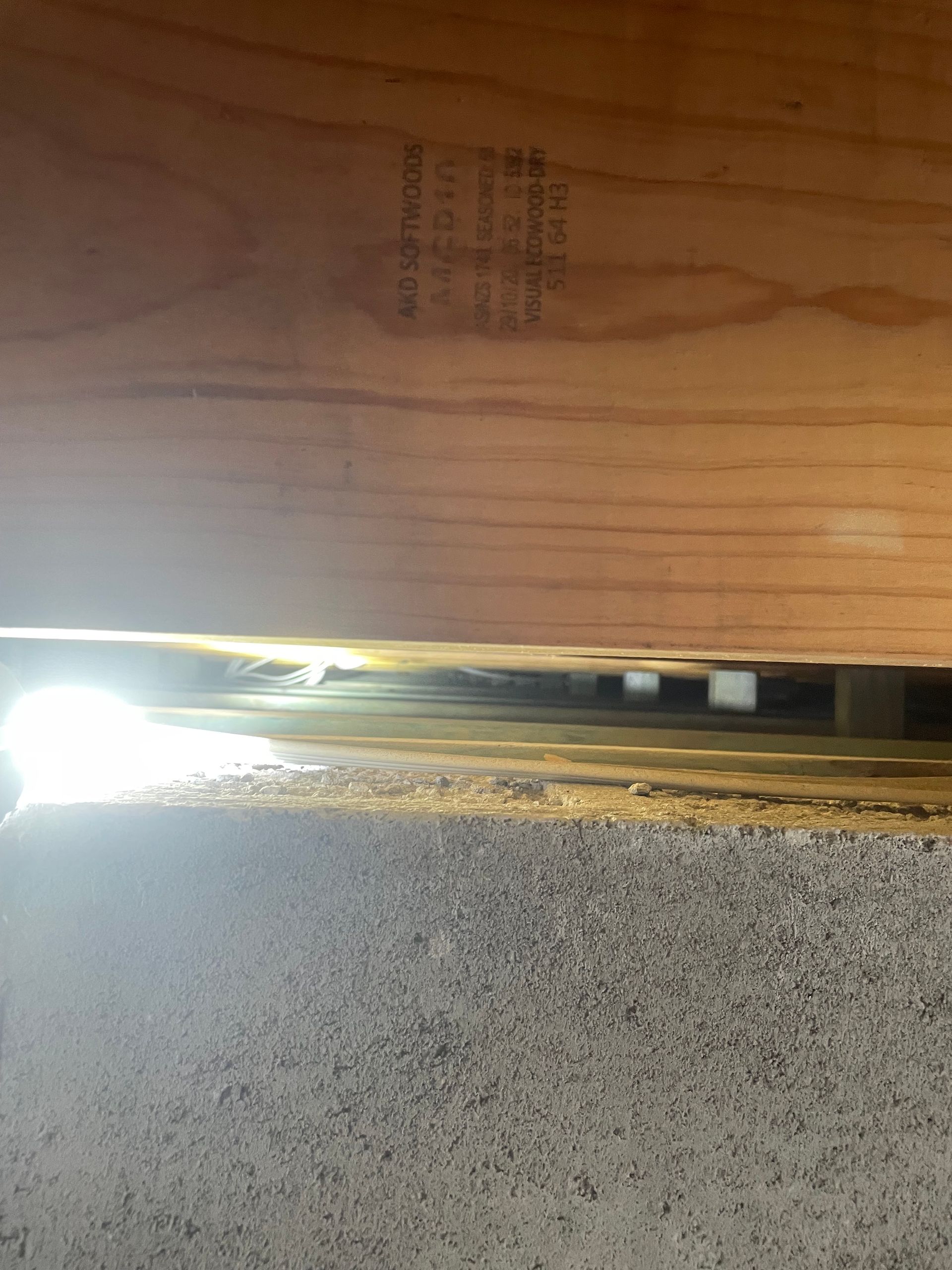
A sub-floor void - provides safe passage around the home.
Common infestation locations (home / farm / commercial): Australian cockroaches may be found in subfloor voids, wall cavities, behind drawers, in roof voids, and inside cupboards.¹¹,¹⁷ Outdoors, they colonise woodpiles, under bark, leaf litter, and garden mulch.¹⁶
Control considerations: Because they prefer plant-based organic matter, treatments often involve residual barrier sprays around garden edges, dust into structural voids, and baits suited for damp locations.¹¹,¹⁶ Also fixing leaks and removing water sources under/around the home can help prevent infestations.
Need more advise? Check out our other articles or reach out for an inspection
Brown-Banded Cockroach
(Supella longipalpa)
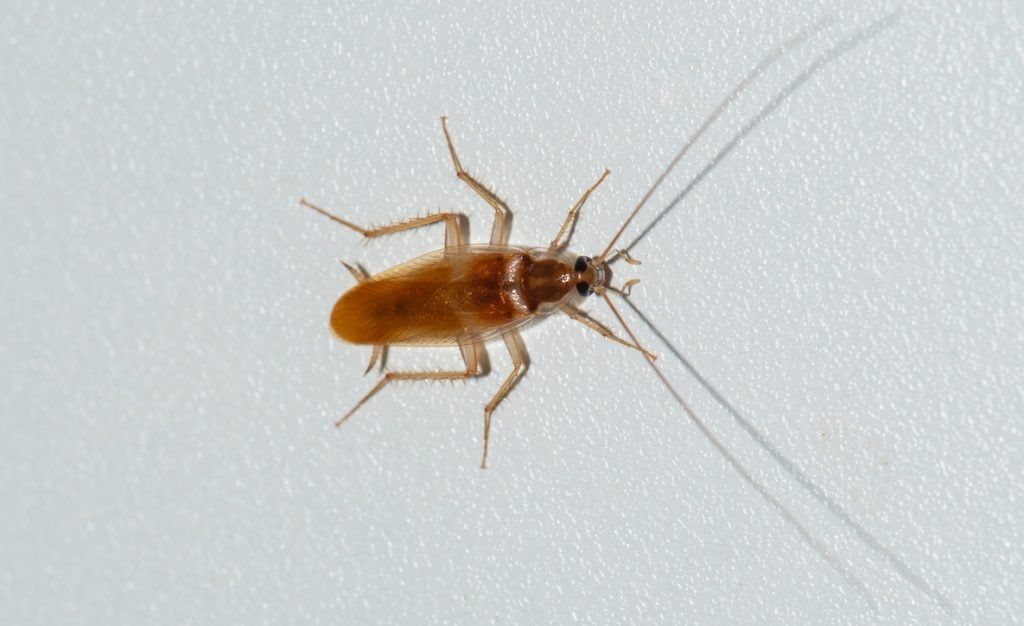
Adult Brown-banded cockroach. Very similar looking to German cockroach but missing the distinct two vertical stripes on their pronotum. Source:
Professional Pest Manager
Appearance (adult vs juvenile):
Adults are small — roughly
10–14 mm long — and glossy brown with two pale bands (light brown or yellowish) that run across the thorax and abdomen.¹⁷ Nymphs are wingless and slightly darker; as they grow, pale banding may begin to appear.²
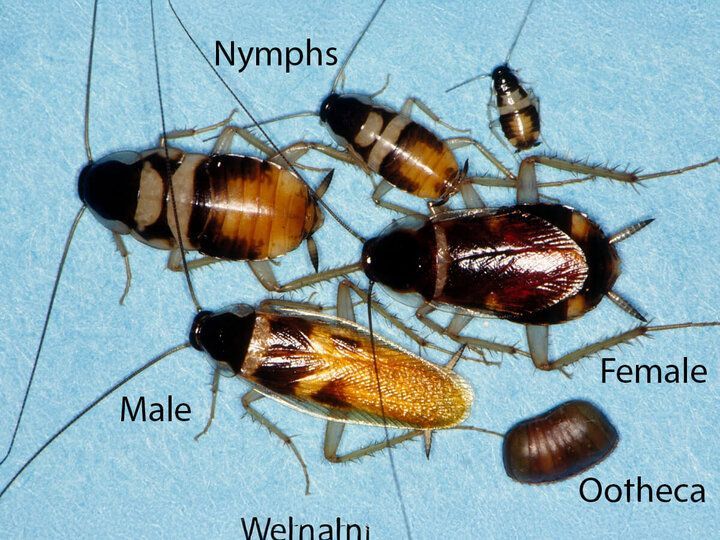
All life stages of Brown-banded cockroach. -
Horticulture, Landscape, and Environmental Systems, Nebraska.
Where they originate / migrate from:
Banded cockroaches favour warm, dry, secluded spaces within buildings. They often originate in wall voids, upper cupboards, roof cavities, and inside or behind furniture and appliances.³ From these structural areas, they migrate into living rooms, bedrooms, and especially kitchen areas.
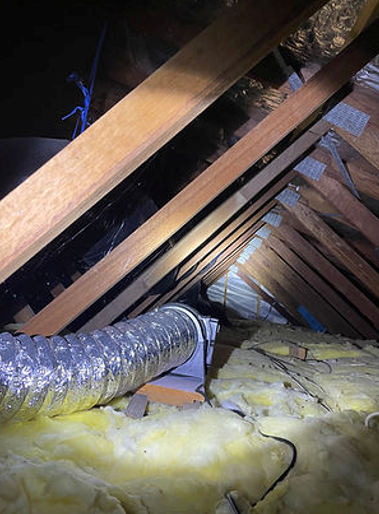
A warm roof void provides perfect conditions for habitation.
Common infestation locations: They are notorious for infesting furniture, electrical equipment (e.g., behind TV, in microwaves), light fixtures, picture frames, high cupboards, and wall cavities.³ Their small size and love of dry, high areas make them particularly difficult to fully eliminate.
Need more advise? Check out our other articles or reach out for an inspection
American Cockroach
(Periplaneta americana)
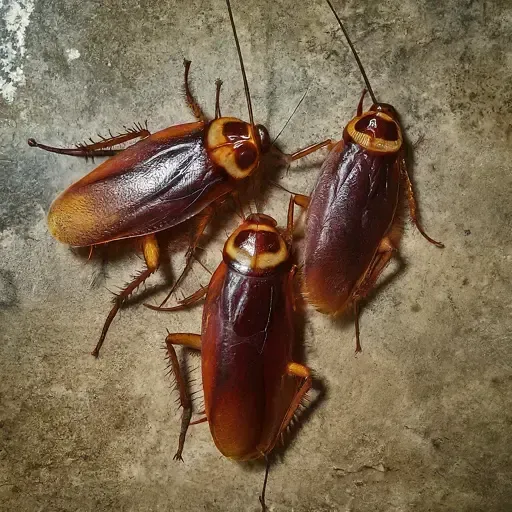
American cockroaches on concrete. No pale-yellow margins like Australian cockroach. Source:
All-in-one pest management
Appearance (adult vs juvenile): American cockroaches are one of the largest common pest species, typically 35–40 mm long, with a reddish-brown body and a pale yellow “figure-eight” or banded pattern on the pronotum.⁶ Nymphs start wingless and gradually develop wing pads; adults have fully developed wings.¹⁷
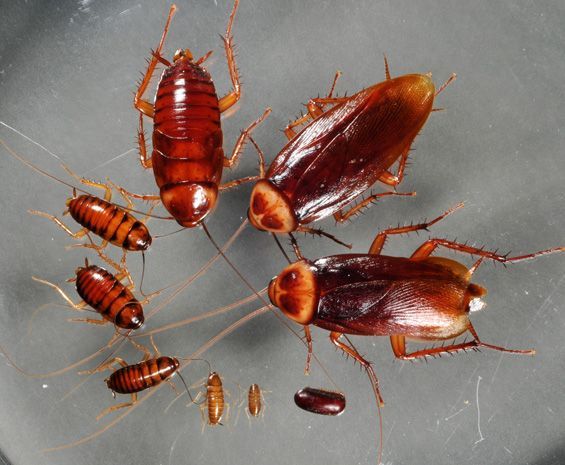
All life stages of American cockroach. Source:
Purdue Entomology
Where they originate / migrate from: These cockroaches favour large, warm, damp voids. Their primary harborage areas include subfloor voids, roof cavities, sewers, drains, grease traps, and basements.16,¹³ From those structural areas, they move into kitchens, commercial food-preparation areas, garages, and storage zones in search of food and moisture.⁶,¹¹
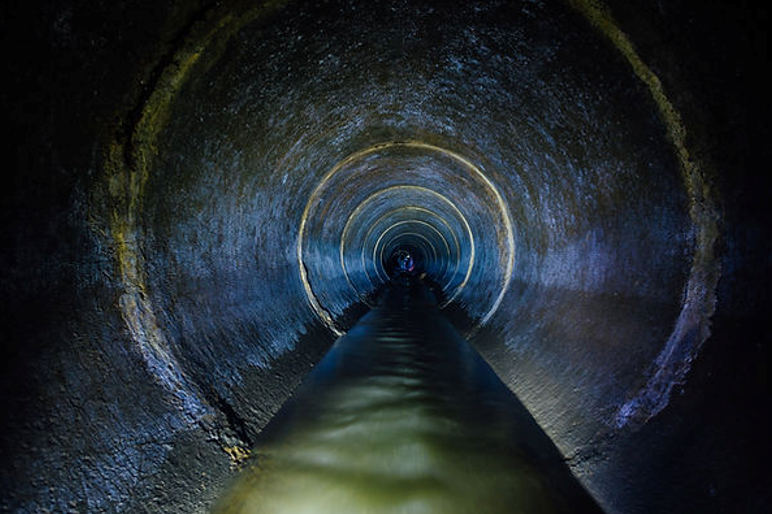
Inside of a sewerage pipe.
Common infestation locations: Because of their size and moisture preference, American cockroaches are found in sewers, wall and roof voids, subfloor spaces, around hot water systems, behind appliances (e.g., fridges), in commercial kitchens, factories, and food storage facilities.16,⁶
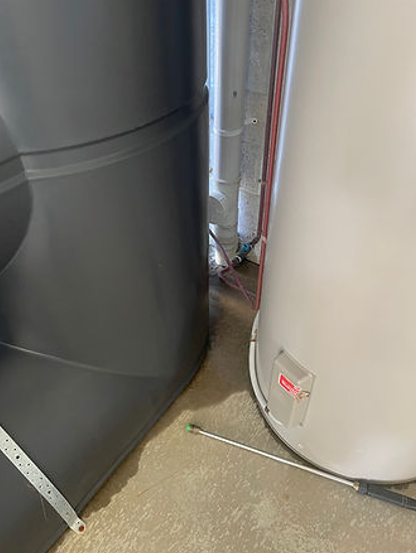
Leaking hot water system provide both warmth and moisture.
Control considerations: Professional pest control often uses a combination of dust (in voids), residual barrier sprays, and baits. Because of their size and wider roaming behaviour, targeting their main harbourage (subfloor, roof) is critical, along with environmental modification - proofing and fixing water leaks are key.
Need more advise? Check out our other articles or reach out for an inspection
Smoky Brown Cockroach
(Periplaneta fuliginosa)
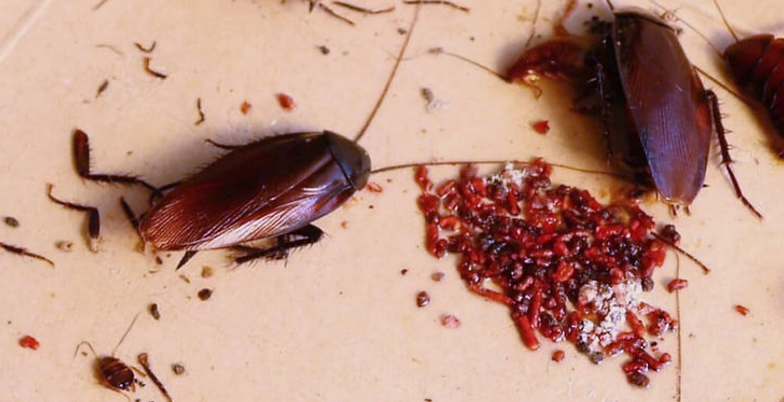
Smoky brown cockroaches, larvae, and adults. ©iStock.com/Yusuke Ide
Appearance (adult vs juvenile): Adult smoky brown cockroaches are approx. 30–35 mm long, glossy dark brown to mahogany, and fully winged.⁶,¹⁷ Nymphs are smaller, wingless at first, and somewhat similar in coloration, with molting gradually bringing on adult features.
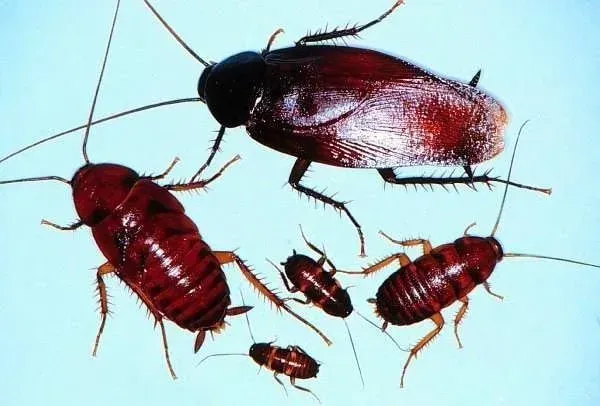
Smoky brown cockroaches at each life stage from instar to adult. Source:
DIY pest control
Where they originate / migrate from: Smoky brown cockroaches thrive in very humid, protected zones: mulch beds, leaf litter, under bark, and outdoor structural voids. They also inhabit roof voids, wall cavities, and subfloors when moisture is high. ¹⁷
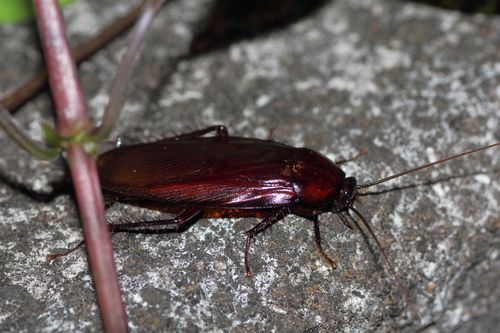
Adult smoky brown cockroach in natural setting. Source:
inaturalist
Common infestation locations: They are often seen in sheds, nurseries, greenhouses, drains, gutters, and around rubbish bins.⁶,⁷ Attracted by lights, they may fly (or glide) into houses at night and hide in roof voids or internal crevices.³
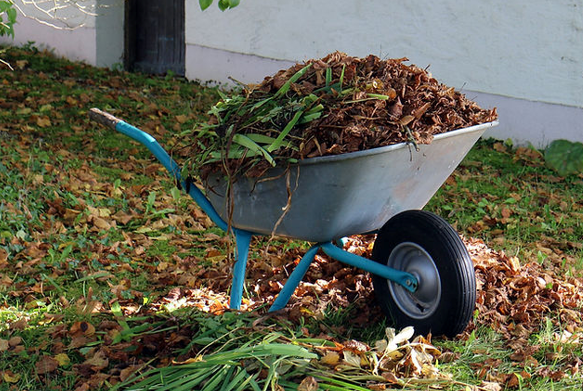
Wheelbarrow left full with green waste can facilitate population growth. Removing leaf-litter can also prevent pest habitation.
Control considerations: Control usually involves treating voids, applying dust, barrier sprays, and ensuring exterior landscape is managed (mulch away from foundations, moisture minimised).¹¹
Need more advise? Check out our other articles or reach out for an inspection
German Cockroach
(Blattella germanica)
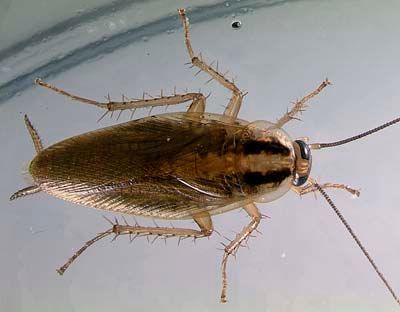
Close up of an adult German cockroach. Source: University of Florida
Appearance (juvenile vs adult):
Adults are small
— typically
10–15 mm in length — light brown to tan with two parallel dark longitudinal stripes on the pronotum (behind the head). Nymphs are wingless and similar in colour but smaller; they rapidly mature through many instars.⁸,²
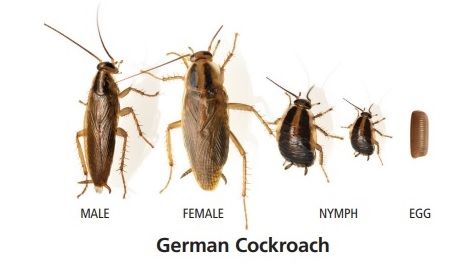
Life stages of German cockroaches, Source: Eradix
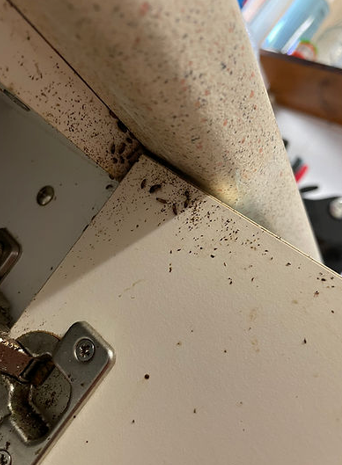
Biology / Breeding rates:
German cockroaches breed very rapidly. A single female’s ootheca (egg capsule) may contain multiple nymphs and she can produce several ootheca during her life. Under favorable conditions (warm, moist, food-rich), populations can explode in weeks.⁸,¹¹
Typical infestation pattern:
German cockroaches typically infest kitchens and food preparation areas first and then work outward into the whole home or building. They prefer warm, humid, food-rich micro-habitats such as behind cookers, inside wall voids near hot water pipes, in appliance cavities, and inside cupboards. Because they colonise food preparation areas, they are a major concern in food service and hospitality.⁸,¹¹
Comparison to other cockroaches:
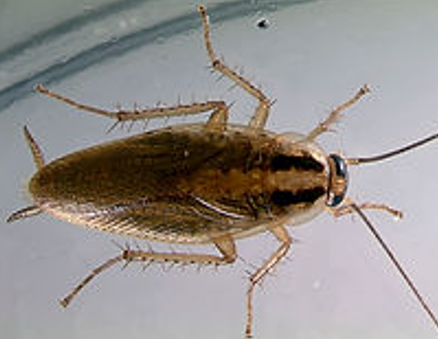
Adult German cockroach
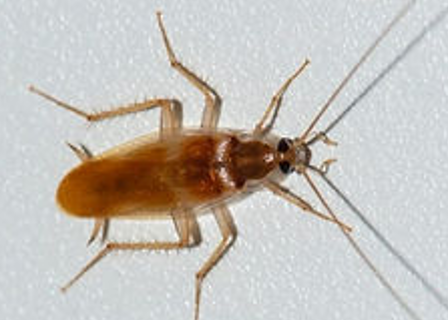
Adult male brown banded cockroach - missing distinct dark vertical marks of German cockroach
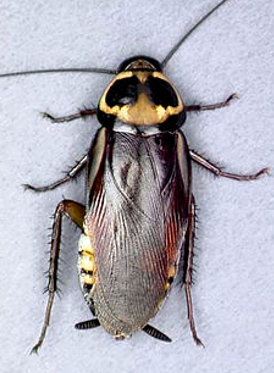
Adult Australian cockroach - very different in appearance and size to German cockroach.
Size: German cockroaches are much smaller than American or Australian cockroaches.⁸
Location: Larger species (American, Australian, smoky brown) often originate in structural voids and outdoors and can be more solitary and seasonal in their indoor activity; Germans are indoor specialists that reproduce indoors year-round.¹,²,⁸
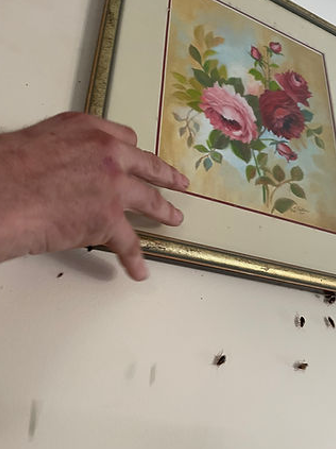
Once established, a population explosion can result in migration of roaches from the kitchen throughout the home.
Control difficulty: German cockroaches are harder to control than larger species for several reasons: high reproductive rate, tendency to hide in small cracks and appliance voids unreachable by sprays, and their ability to develop resistance to insecticides.
Treating severe German infestations may require multiple visits, synergised use of baits (gels), Insect Growth Regulators (IGRs), chemical rotation plans and thorough elimination of food and moisture sources — often making these jobs more expensive and labor-intensive than single treatments for larger roach species.⁸,⁵,¹¹
Damage to electronics: German cockroaches are notorious for entering electronic equipment (microwave ovens, televisions, computers), where they can cause short circuits and damage by fouling contacts — their small size enables them to access tight equipment cavities more easily than large species.⁸,¹¹
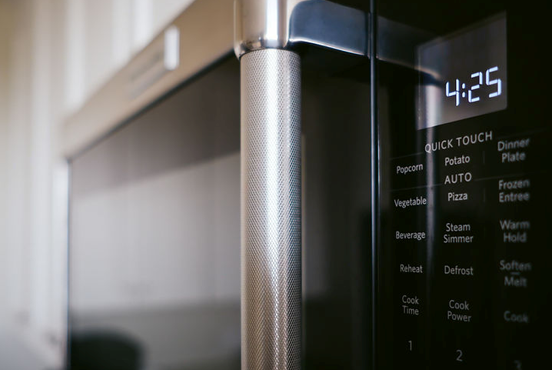
Microwaves are a favorite harborage of German cockroaches, along with toasters, TV's and gaming consoles. Typical infestation signs include: musky smell, droppings and casings in/around appliance, roaches coming from or going into appliance.
Control best practices for Germans (summary):
- Use of professional grade insecticides by licensed technicians and using a chemical resistance rotation plan are vital to successful control. Old pesticides (over 5 years from date of manufacture) or pesticides that have been left in the sun/in heat have reduced effectiveness compared to newly manufactured products stored correctly.
- Fipronil, Bifenthrin and Indoxacarb are often overused and are found in common DIY formulations. roaches may have resistance to these active ingredients.
- Rely primarily on targeted gel baits and IGRs placed in known harbourage sites (appliance voids, cupboards, and cracks, fridge void) rather than broad-spectrum perimeter sprays.⁵,¹¹
- Combine baits and IGRs with dusting in wall voids where applicable, rigorous sanitation, and removal of food and grease residues.⁵,¹¹
- Expect multiple follow-up visits, monitoring with glue traps, and client compliance (decluttering, food storage) for full eradication.⁸
Need more advise? Check out our other articles or reach out for an inspection
Safety & Health Risks
Cockroaches are mechanical vectors — they physically pick up and move pathogens from rubbish, drains and animal faeces onto food and surfaces. The major health concerns include:
Disease Transmission:
Cockroaches can pick up and spread Salmonella (causing salmonellosis), Shigella (dysentery), Escherichia coli (E. coli), and other gut pathogens.¹,¹⁴,¹
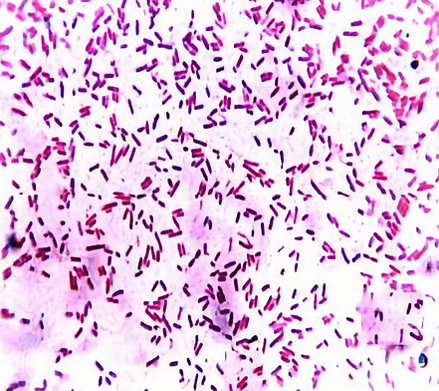
Isolated E. coli in Gram's straining (microscopic) showing Gram negative, pink color, short rod shape organisms, arranged in single or paired (Modified Gram's Stain, ×830)
Experimental studies in Australia have shown that Salmonella enteritidis can persist in cockroach faeces for days to weeks, posing a risk of food contamination.¹⁴
They can also carry parasitic cysts or eggs, and their bodies can transport a variety of bacteria (depending on where they forage).⁹
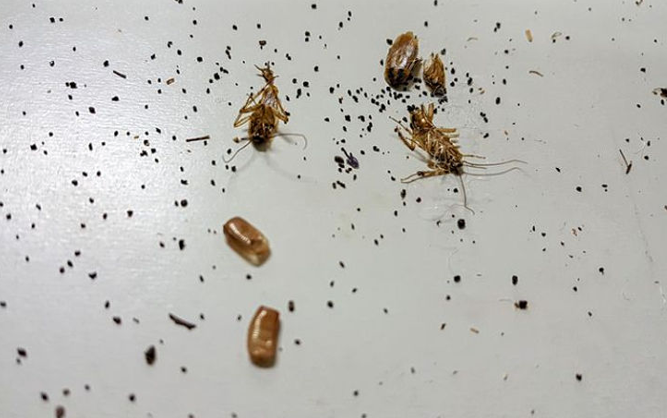
Egg casings and shed exoskeletons break down and become airborne, becoming allergens. Source: Shutterstock
Allergic reactions and asthma: Cockroach allergens (from faeces, saliva and shed skins) are well-recognised triggers for allergic rhinitis and asthma; repeated exposure is a known risk factor for asthma exacerbations in children and sensitised adults.¹¹,⁶
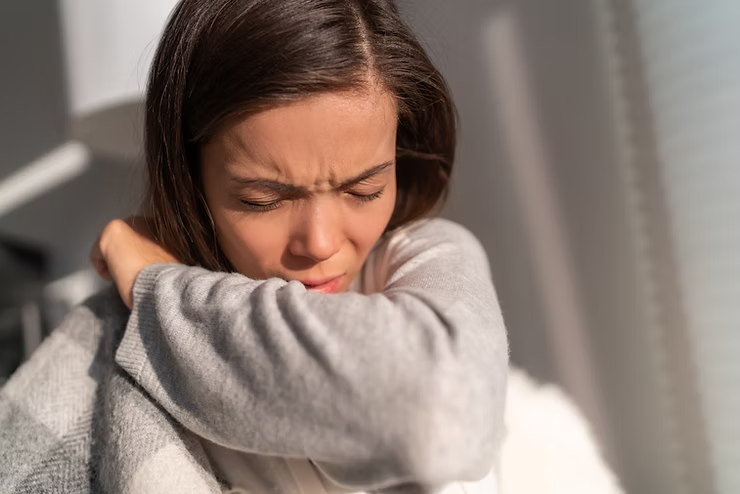
Indirect risks: Contamination of food, medical or food-preparation surfaces can increase the risk of outbreaks in commercial kitchens, aged care and childcare settings.⁹

In extreme infestations with a large breeding population German cockroaches are often active during daylight hours and can contaminate food.
Because cockroaches frequent sewers, drains, refuse and decaying matter, the pathogens they vector can include any organism present in those environments — which is why strict hygiene and professional control are crucial in food service and healthcare settings.¹,⁹
Prevention Strategies for Cockroaches
Preventing cockroach infestations is the most cost-effective and health-protective approach. For residents or businesses in Port Macquarie, here are proven prevention strategies.
Cleaning and Hygiene
- Indoor surfaces: Maintain a rigorous cleaning schedule in kitchens, bathrooms, pantries, and food-prep areas. Wipe up crumbs and grease, clean appliances (under and behind fridges/ovens), and wash surfaces regularly.
- Food storage: Use sealed, airtight containers (plastic or glass) for food; avoid storing food in cardboard boxes or loose packaging that cockroaches can penetrate.
- Refuse management: Take out kitchen bin waste daily. Clean indoor bin interiors regularly.
- Outdoor bins / commercial bins: Wash and rinse outdoor bins, commercial bins, and skip bins to remove sludge, slime, and food residues. Ensure bins have good drainage or weep holes in the base to avoid liquid accumulation, which attracts cockroaches.
- Bin lids & seals:
Keep bin lids closed and clean the seals to reduce odor and insect attraction.
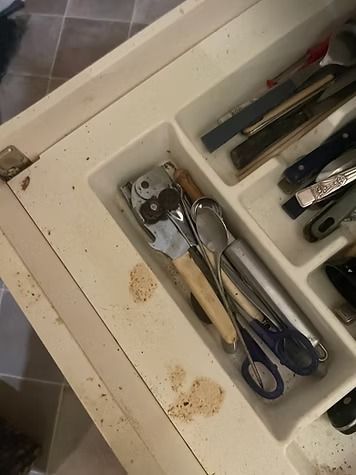
Spills and drips into draws or crumbs left on counter tops provide ample food for population expansion. Leaving food-mess reduces gel bait effectiveness.
Decluttering & Organising
- Remove or minimise cardboard boxes, paper bags, and clutter that offer hiding places.
- Store items in plastic bins with tight-fitting lids rather than piles on the floor.
- Regularly inspect and tidy subfloor areas, attics, roof voids, and under-house storage. Use shelving and keep items off the ground.
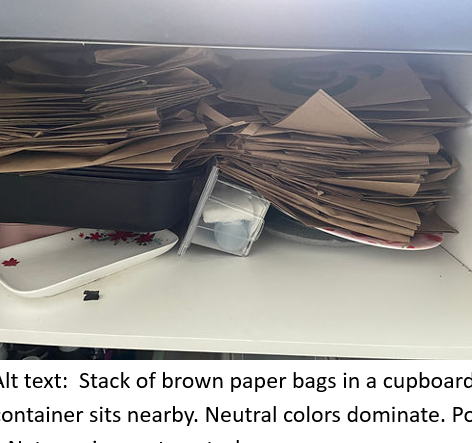
Cardboard boxes and paper bags provide habitation and perfect locations for depositing egg sacs.
Moisture Control
- Repair leaking taps, pipes, gutters, and roof leaks promptly. Even small drips can create favourable humidity.
- Improve ventilation in humid areas (laundry, roof voids, subfloor) using dehumidifiers or fans.
- Ensure outdoor drainage is working properly so water does not pool near foundations.
- Spread mulch or plant debris away from the structure; avoid mulch directly against the building, or use coarse mulch that’s less hospitable to roaches.
Sealing & Structural Proofing
- Cracks and crevices: Seal gaps around skirting boards, cornices, door frames, window frames, and baseboards. Even 5–10 mm gaps can allow cockroach entry.16
- Utility penetrations: Use foam sealant, grommets, or fire-rated collars around pipes, electrical conduits, and air-conditioning lines to close entry points.
- Subfloor / roof voids: Screen or mesh subfloor vents; seal or cap roof vent access points and eaves; make sure roof access hatches are secure.
- Doors and windows: Install door sweeps, draught seals, and mesh screens on windows to block cockroach ingress.
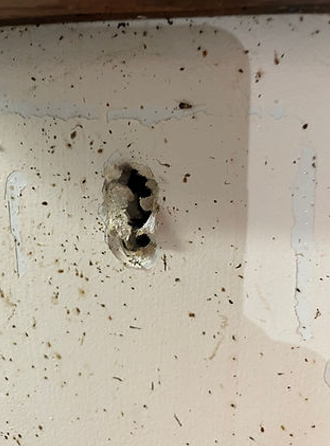
Damage to walls can provide access to wall voids, where roaches can hide and move freely throughout the home.
Pest Control Approaches
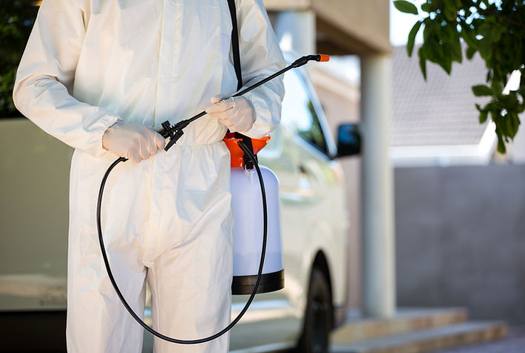
When preventive measures alone are insufficient — or once an infestation is confirmed — professional pest control is usually required. For pest control in Port Macquarie, working with a licensed, local provider ensures both safety and effectiveness.
Chemical Treatments Commonly Used
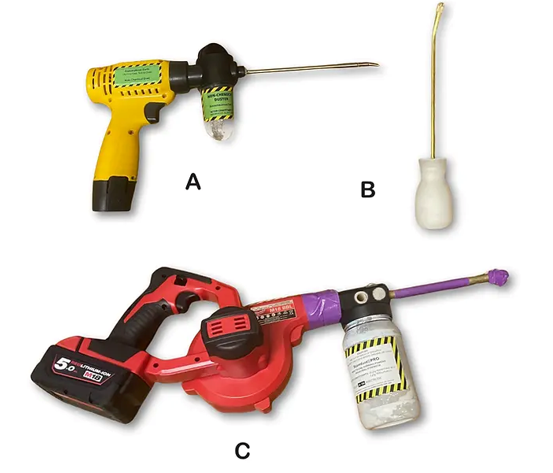
Tools used for various dust treatments. Electric hand dusters (A) provide precise controlled application, traditional hand dusters (B) require more practice to use correctly and are more prone to accidental spills. Blowers with dust attachments are used almost exclusively for larger areas such as roof voids and subfloor areas. Only licensed and trained technicians should use these tools.
Dust formulations:
- Applied into subfloor voids, roof cavities, cracks/crevices, wall voids, and behind appliances.
- Cockroaches walk through treated dust, pick up insecticide, and ingest it during grooming — a highly effective mode of delivery.16
- Desiccants such as silica dust are a 'chemical free' alternative, dehydrating target pests. When applied in always-dry areas, silica can provide effective control for many years.27
- All dust treatments should be applied by trained and licensed technicians wearing appropriate PPE (especially a respirator). 28
Gel baits (gels):
- Placed in kitchens, cupboards, behind appliances, and along skirting.
- Cockroaches consume the bait and carry it back to their hiding places, spreading the toxicant to other roaches. Useful for German cockroaches and other bunched species.
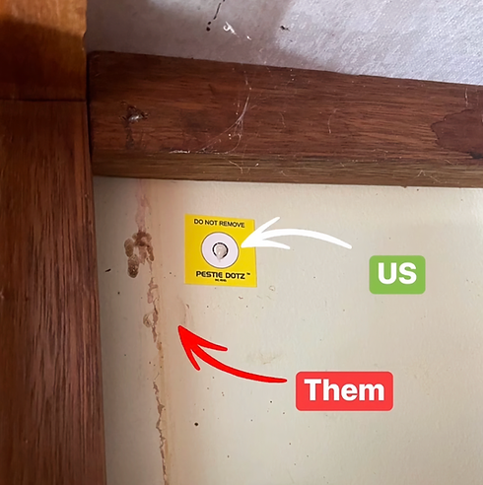
Cheap and nasty gel applications can stain and damage surfaces and paint jobs. Often gels are over-applied which can result in reduced feeding.
Insect Growth Regulators (IGRs):
- These chemicals disrupt the cockroach life cycle by preventing nymphs from reaching adulthood or reproducing.
- Especially valuable for German cockroach control, as they reduce future generations.
Perimeter sprays / barrier treatments:
- Sprays along external walls, around foundations, eaves, and around service entries form a chemical barrier. Fridge void treatments with IGR's are highly effective for German cockroach infestation.
- Often combined with internal treatment (dust, baits) to block ingress and kill roaming individuals.
Integrated Pest Management (IPM)
An effective long-term strategy includes:
- Inspection & species ID: Correct identification (Australian, American, German, etc.) guides the treatment method.
- Harbourage elimination: Focus on reducing hiding places — clutter, leaks, voids — so treatments are more effective.
- Monitoring: Use sticky traps, bait stations, or glue boards before and after treatment to gauge population size and track progress.
- Client cooperation: For long-term success, clients must fix leaks, declutter, seal gaps, and maintain hygiene.
- Follow-up visits: Return visits are essential, especially for species like German cockroaches.
- Resistance management: Rotate chemical actives to reduce the risk of cockroach populations developing resistance. Licensed pest technicians often use professional-grade formulations not available to DIYers, which helps prevent resistance development.
Challenges for Pest Technicians
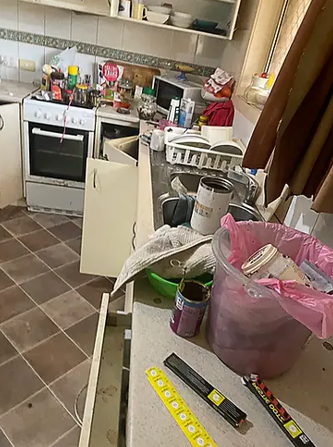
Excessive/heavy-weight clutter can prevent access for safe treatment to some areas. Lack of client hygiene can be a result of disabilities - It's vital to co-ordinate with clients, cleaning services and/or supports to deliver holistic pest management and prevention.
- Client non-compliance: Without proper cleaning, clutter removal, leak repair, and proofing from property occupants, treatments may fail or infestations recur.
- Locating hidden harbourages: Roaches may hide deep inside subfloor voids, wall cavities, ducts, appliances, or ceilings — making treatment complicated.
- Re-infestation risk: Even after a successful treatment, structural or environmental issues may allow new cockroaches to return.
- Chemical resistance: Overuse of DIY products (e.g., bifenthrin or fipronil sprays) can lead to resistant populations — professional formulations and active-ingredient rotation help mitigate this.
- Safety and regulation: Technicians must use chemicals approved in Australia, follow label rates, and apply treatments safely — particularly in homes, food premises, or sensitive facilities.
Why Professional Pest Control Is Worth It in Port Macquarie

Port Macquarie and the Mid-North Coast region are especially vulnerable to cockroach infestations because of the local climate. The area experiences warm, humid conditions for much of the year — a perfect environment for cockroach species to thrive and reproduce.¹⁰
The subtropical climate means that cockroaches, especially those that favour warmth and moisture, can remain active year-round, increasing the risk of persistent infestation.
Pest control companies that operate in Port Macquarie (such as PESTMAC, NATUREWISE, and Rozken Pest Control Services) report that cockroach calls are among their most common general-pest services.¹⁴,¹⁶
This is consistent with regional demand: pest professionals note that German cockroaches in particular are a frequent challenge in local homes due to their rapid breeding in kitchens and humid voids.⁶
Health & Public Safety in Port Macquarie

Cockroach infestations in Port Macquarie are not just a nuisance — they pose real health risks. Local pest control operators often educate clients about how cockroaches can contaminate food surfaces, spread bacteria like Salmonella and E. coli, and trigger allergies or asthma, especially in confined indoor settings.⁵
The NSW Public Health Bulletin also emphasizes these dangers: German cockroaches and American cockroaches have been identified as two of the most significant pest species in the state.16
In commercial settings, such as restaurants or bakeries, even a single year of unchecked cockroach activity can lead to serious contamination. A case study from a NSW wholesale bakery documented visible cockroach activity — live bugs, shed skins, and droppings — posing a massive risk to food safety.¹⁵
For food businesses in Port Macquarie, this is particularly relevant: strict hygiene standards and regular pest inspections are essential to protect customers and maintain health compliance.
German Cockroach: A Closer Look
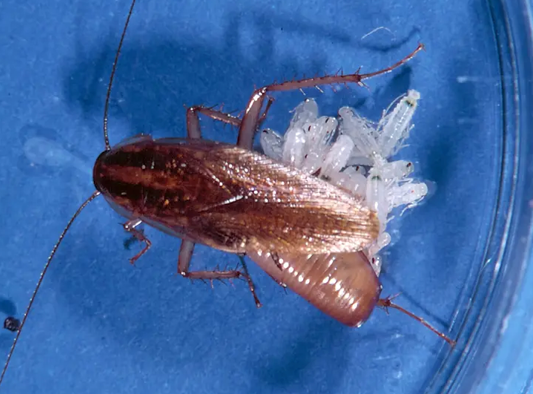
German cockroach female with ootheca hatching. - Florida University
Because of its biology and behaviour, the German cockroach deserves special attention.
- They are small (12–15 mm) and reproduce extremely quickly — up to several generations per year if conditions are optimal.¹⁵
- Infestation often begins in the kitchen, behind or under appliances, near water sources, and then spreads into wall voids, cupboards, and electronics.
- Their small size allows them to exploit micro-harbourages (tiny cracks, electrical or appliance cavities).
- Professional control nearly always requires gel baits, IGRs, and sometimes dusting in voids. Multiple follow-ups, chemical rotation and thorough sanitation are essential.
- They can infest electronic devices, causing damage by shorting or fouling circuit boards.
- Because of their high reproductive potential and capacity for resistance, they often cost more to eradicate than larger species.
Need more advise? Check out our other articles or reach out for an inspection
Practical Tips for Port Macquarie Property Owners
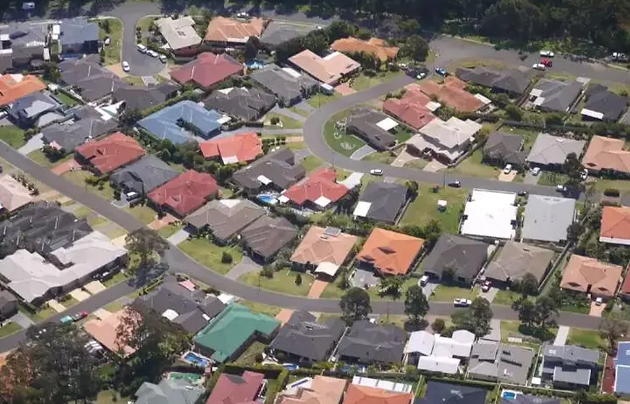
Port Macquarie houses from the air. Source: Port Macquarie News 2013.
Here are actionable steps for homeowners, landlords, and businesses in the Port Macquarie region:
1. Get a professional inspection: If you suspect roaches, hire a licensed technician to identify the species, locate harbourage areas (subfloor, roof, voids), and design a treatment plan.
2. Clean proactively: Focus on kitchen, food prep, and bin areas. Wash out outdoor / commercial bins and maintain hygiene.
3. Declutter and organise: Remove cardboard and clutter, especially around subfloor and storage areas. Store items in sealed bins.
4. Fix moisture problems: Repair leaks, improve drainage, and ventilate humid areas.
5. Seal and proof: Close up cracks, crevices, and entry points around pipes and vents.
6. Implement IPM: Work with your pest technician to set up monitoring, use baits and IGRs, and plan follow-up treatments, follow their advise for long term success.
7.
Maintain long-term vigilance: Even after treatment, keep good hygiene, check traps, and call for follow-up if roaches return.
Choosing the Right Pest Control Provider in Port Macquarie
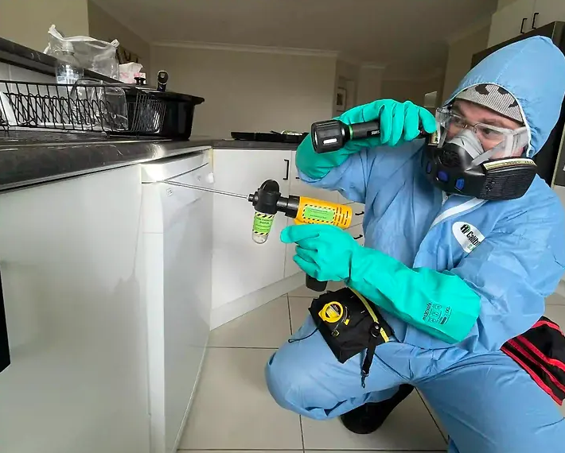
When looking for pest control for cockroaches in Port Macquarie, here are some key considerations that matter locally:
Use a local, licensed operator:
- NatureWise Pest Control Services Port Macquarie, Lake Cathie, Bonny Hills, Wauchope, Laurieton and surrounding areas and provide a specialised German-cockroach reduction program with included follow-up visits.¹⁵
- Rozken Pest Control, also based in Port Macquarie, brings decades of local experience.¹
- Companies like PESTMAC also service the greater Port Macquarie areas, offering cockroach control tailored to the local environment.¹¹
Integrated pest management (IPM):
- Ask for a plan that includes inspection + identification, treatment + follow-up, and prevention advice (e.g., sealing, moisture control, clutter removal).
- For German cockroaches, make sure the provider uses gel baits and Insect Growth Regulators (IGRs) — local climate helps them breed fast, so a robust treatment strategy is important.
Value long-term protection:
- Given the climate, a one-off perimeter spray is often not enough. Identifying the source and contributing factors of the infestation is vital for long term control. Consider annual or bi-annual inspections/treatments, especially for kitchens, roof voids, and subfloor areas.
- Ensure your pest controller helps you identify structural risk points (like gaps around pipes, roof eaves, subfloor vents) and gives recommendations for sealing and proofing. Pest control services can include various forms of proofing as part of their service.
Health compliance for businesses:
- If you run a food business in Port Macquarie, regular pest inspections are not just good practice — they're part of maintaining food hygiene standards.
- Work with pest control providers who can document inspection and treatment for compliance, and who understand cockroach risks in food-prep areas like bakeries, cafés, or commercial kitchens.
If you're dealing with cockroaches in Port Macquarie — whether it's a few in the kitchen or a full-blown infestation — it's important to act fast:
- Book a professional inspection: Contact a local provider like LPM, NatureWise, or Rozken for a proper assessment.
- Implement prevention strategies: Seal gaps, fix leaks, manage waste, and declutter around your property.
- Schedule regular follow-up: Cockroach control isn't “set and forget” — make sure your selected provider identifies the source and scope of the infestation and have a follow-up plan to monitor and prevent recurrence.
For trusted, effective, and locally-relevant pest control in Port Macquarie, working with experienced, licensed operators will give you the best long-term protection against cockroach pests.
Book your inspection today!
Conclusion
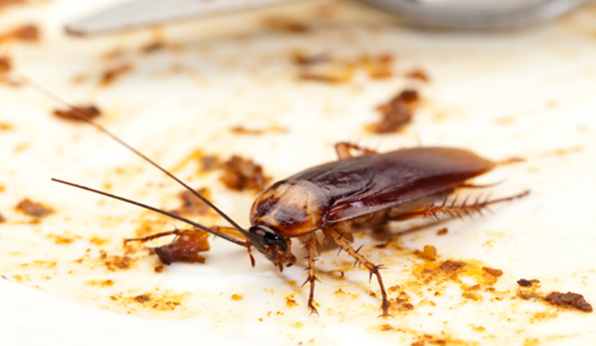
An American cockroach eating food-mess. Source: Native Pest Management
Cockroaches are more than just a creepy inconvenience — they are serious pests that pose health risks, damage property, and persist unless properly managed. In Australia, species such as the Australian, American, smoky brown, banded, and German cockroach each have their own biology, habits, and treatment needs.
For people in Port Macquarie, the right approach is a combination of prevention (cleaning, sealing, moisture control), monitoring, and professional pest control. Particularly for German cockroaches, professional intervention using baits, IGRs, dusts, and follow-up is essential, because of their small size, high reproduction, resistance potential, and ability to hide in electrical devices.
By combining client cooperation, structural hygiene, and expert pest control, you can protect your home or business from the persistent threat of cockroach infestation — reducing health risks, stress, and potential costs in the long run.
References
- Victorian Department of Health. Cockroaches: Pest control guide. Health Victoria; n.d. Available from: https://www.health.vic.gov.au/pest-control/cockroaches
- ArkPest; Bayer Australia. Cockroach Identification Chart. Tahmoor Pest Control; n.d. Available from: https://www.tahmoorpestcontrol.com.au/cockroach-identification-chart
- BugStop Australia. Cockroach species identification & behaviour. Adelaide Pest Control; n.d. Available from: https://adelaidepestcontrol.com.au
- Flick Anticimex. Pest Fact Sheet: Cockroaches. Better Health Channel; n.d. Available from: https://www.betterhealth.vic.gov.au/health/conditionsandtreatments/cockroaches
- PestPowersSydney. Cockroach risk and species overview. PestPowersSydney; n.d. Available from: https://pestpowersydney.com.au
- Adelaide Pest Control. Cockroach species profiles. Adelaide Pest Control; n.d. Available from: https://adelaidepestcontrol.com.au
- RoachBusters Australia. Types of cockroaches and health risks. RoachBusters; n.d. Available from: https://roachbusters.com.au
- NSW Health. Salmonella, allergen risks, and cockroach-related public health data. NSW Public Health Bulletin; various years. Available from: https://www.health.nsw.gov.au
- Government of Western Australia, Department of Health. Cockroach biology & habitats (Environmental Health Practitioner Manual). WA Health; n.d. Available from: https://ww2.health.wa.gov.au
- Yates Australia. Cockroach control advice: baits and sprays. Yates; n.d. Available from: https://www.yates.com.au
- Proven Pest Control. Cockroach control methods and life cycles. ProvenPestControl; n.d. Available from: https://provenpest.com.au
- Aerobeam Professional Pest Management. General cockroach health risks. Aerobeam; n.d. Available from: https://aerobeam.com.au
- PestMAC. Cockroach Infestations – Kempsey & Port Macquarie region. PestMAC; 2023. Available from: https://www.pestmac.com.au/post/cockroach-infestations-faq-in-coastal-regions
- Hunter & Coast Pest Control. Mid North Coast Cockroach Control Services. Hunter & Coast Pest Control; 2023. Available from: https://hcpest.com.au/pest-control-mid-north-coast/
- NatureWise Pest Control. Local pest insights – Port Macquarie (blog). NatureWise Pest Control; 2024. Available from: https://www.naturewisepest.com.au/blog-german-cockroaches/
- NSW Department of Health. The public health risks of cockroaches. NSW Public Health Bulletin. 2004;15(4). Available from: https://www.health.nsw.gov.au/phb/Documents/2004-4.pdf
- Yoshimoto, J., Cano, EB, Orellana, S. (2018). Insects of Guatemala: Identification Guide. Second Edition. Universidad del Valle de Guatemala and USAC Museum of Natural History: Guatemala. Available from: https://biodiversidad.gt/portal/taxa/index.php?tid=4442&taxauthid=1&clid=12136
- Australian cockroach, Periplaneta australasiae, 7-day-old nymph (dorsal view). C. Montero, University of Florida Available from: https://entnemdept.ufl.edu/projex/gallery/dl/cockroaches/text/australian_cockroach.htm
- Adult Australian cockroach, Periplaneta australasiae. R.W. Baldwin, University of Florida Available from: https://entnemdept.ufl.edu/projex/gallery/dl/cockroaches/text/australian_cockroach.htm
- Australian cockroach, Periplaneta australasiae, nymph and fecal smears. (Photographer: L.J. Buss, University of Florida) Available from: https://entnemdept.ufl.edu/projex/gallery/dl/cockroaches/text/australian_cockroach.htm
- Cockroaches (no date) Cockroaches | Horticulture, Landscape, and Environmental Systems | Nebraska. Available at: https://hles.unl.edu/insects/urban-entomology/cockroaches/ (Accessed: 18 November 2025).
- Anon “The American Cockroach - All N1 Pest Control Management LLC.” All N1 Pest Control Management LLC - Safe and Effective Cypress, Katy & Houston Pest Control Services, 20 Aug. 2024, alln1pestcontrolmanagement.com/american-cockroach-facts/.
- Who Let the Bugs Out?: Purdue: entomology: insect: collect: supplies: specimen: mounting: identifying: displaying: preserve: labels (no date) Purdue. Available at: https://extension.entm.purdue.edu/radicalbugs/default.php?page=pests/american_cockroach (Accessed: 18 November 2025).
- Smoky-brown Cockroach (A guide to the Roaches & Termites (Order Blattodea), Grasshoppers, Crickets & Katydids (Order Orthoptera), Mantises (Order Mantodea), and Stick Insects (Order Phasmida) of Austin and Travis County, TX; USA) · iNaturalist (no date) iNaturalist. Available at: https://www.inaturalist.org/guide_taxa/1150437 (Accessed: 19 November 2025).
- Martin, K. (2022) Smoky Brown Cockroach, Do It Yourself Pest Control. DIYPestControl. Available at: https://diypestcontrol.com/smokybrownroach1.htm (Accessed: 19 November 2025).
- “Smoky-Brown Cockroach (A Guide to the Roaches & Termites (Order Blattodea), Grasshoppers, Crickets & Katydids (Order Orthoptera), Mantises (Order Mantodea), and Stick Insects (Order Phasmida) of Austin and Travis County, TX; USA) · iNaturalist.” iNaturalist, www.inaturalist.org/guide_taxa/1150437. Accessed 19 Nov. 2025.
- Abbar S, Wang C, Cooper R. Evaluation of a Non-Chemical Compared to a Non-Chemical Plus Silica Gel Approach to Bed Bug Management. Insects. 2020 Jul 14;11(7):443. doi: 10.3390/insects11070443. PMID: 32674408; PMCID: PMC7411924. Available At: https://pmc.ncbi.nlm.nih.gov/articles/PMC7411924/
- “NSW Dust Strategy.” SafeWork NSW, SafeWork NSW, 23 Oct. 2024, www.safework.nsw.gov.au/advice-and-resources/campaigns/dust-strategy.
- Langdale, L. (2025) Council set to fast-track 2000 homes thanks to funding boost, Port Macquarie News. Port Macquarie News. Available at: https://www.portnews.com.au/story/8962981/port-macquarie-hastings-council-fast-tracks-2000-new-homes/ (Accessed: 19 November 2025).
- “Newborn Baby German Cockroach (Nymphs).” Pest, 13 Feb. 2024,
www.pest-help.com/pests/cockroaches/german-cockroach/baby-german-cockroach/.