At War with White-Footed Ants | Port Macquarie Ant Control

Clint Mcmanus • March 13, 2026

Why Technomyrmex albipes is Port Macquarie's most relentless pest ant — and why fighting them the wrong way makes everything worse.

- Port Macquarie & Mid North Coast NSW - Residential & Bushland-Interface Properties

Not All Black Ants Are Equal


Port Macquarie homeowners often call about "black ants." They're everywhere on the Mid North Coast — trailing up trees, crossing eaves, appearing in the kitchen. Most of the time, they're a nuisance. Occasionally, they're something far more serious.


The black house ant (Ochetellus glaber), green-headed ant (Rhytidoponera metallica), and the erratic crazy ant (Paratrechina longicornis) are all common across the Mid North Coast. They cause problems and warrant treatment when pressure is high — but their colonies are comparatively small, their queens singular or few, and they respond well to targeted professional treatment. A well-planned visit or two typically delivers results.[1]

The white-footed ant (Technomyrmex albipes) is in a completely different league.[1,12] Its colony biology is so unusual, and its resistance to conventional treatment so pronounced, that it defeats most standard approaches outright. On a bushland-interface property in Port Macquarie — with mature trees, epiphytes on the facade, garden walls, or a fence line against scrub — this species demands specialist knowledge and a sustained, multi-visit programme to bring under control.[2]

Species Typical Colony Size Management Difficulty Citation
Black house ant (Ochetellus glaber) Small-moderate Low — responds well to standard baiting [1]
Green-headed ant (Rhytidoponera metallica) Small-moderate Low-moderate — nest-targeted treatment effective [1]
Crazy ant (Paratrechina longicornis) Moderate Moderate — manageable with targeted bait [1]
White-footed ant (Technomyrmex albipes) 8,000 – 3,000,000+ Very high — specialist multi-visit programme required [5,12]

Identifying the White-Footed Ant


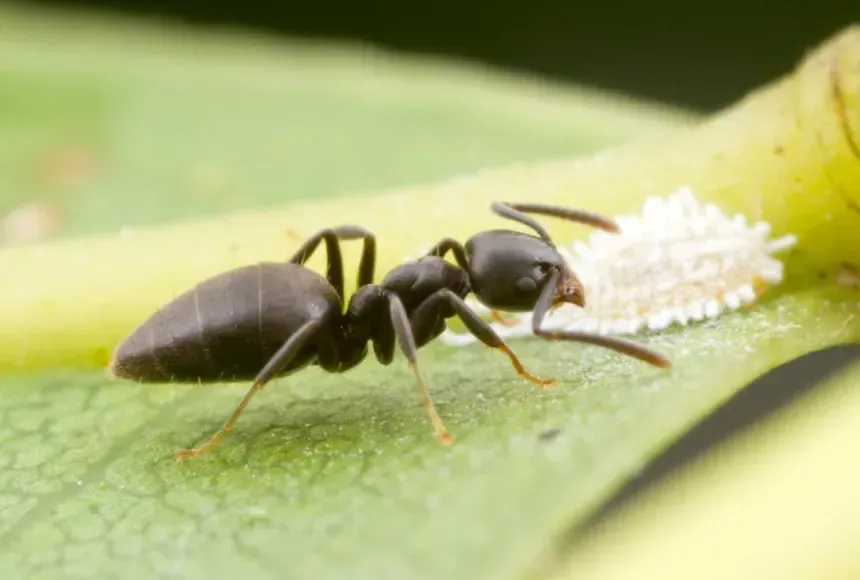
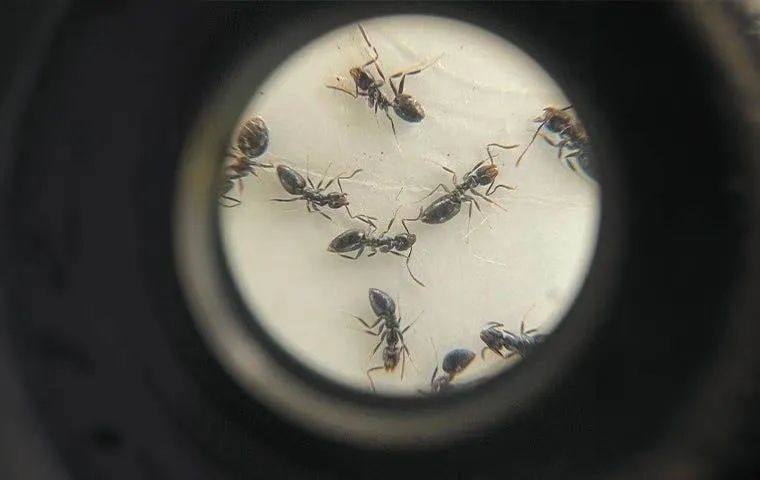
T. albipes is a small (2–3 mm), dull chocolate-black ant with distinctly pale whitish-yellow tarsi (feet) — the origin of its common name.[3] Workers have 12-segmented antennae, a flattened and largely hidden petiolar node (the waist segment), and characteristically tilt their gaster (abdomen) slightly upward while foraging. Trails are well-defined and persistent: along branch lines, fence railings, gutters, structural edges, and straight up building facades to the roofline — following edges and hard lines with precision.[3]

Confirmed species-level identification within the Technomyrmex genus requires specialist morphological examination, as members of the albipes species complex are frequently misidentified — a problem documented internationally that complicates threat assessment and management planning.[4,11] The closely related T. difficilis dominates in Florida and is more prevalent in northern Queensland, while T. albipes is the species most commonly confirmed in NSW. For management on the Mid North Coast, both behave identically and require the same treatment approach.[3,11]

Why They're So Hard to Kill


A Colony With No Single Point of Failure


Mature white-footed ant colonies can contain anywhere from 8,000 to over three million individuals, spread across multiple, interconnected nest sites.[5] Nesting occurs both terrestrially and arboreally — in tree hollows, under bark, in rotting wood, wall cavities, hollow fence railings, roof voids, behind fascias, and within climbing plants and epiphytes.[4,9] The idea of "killing the queen and killing the colony" simply does not apply to this species.

Up to half of the entire colony is composed of fertile reproductive females called intercastes — worker-like ants each possessing a spermatheca (sperm storage organ) and capable of independent reproduction.[5] These intercastes are inseminated by wingless males within the nest itself, meaning new reproductive capacity is generated continuously from inside the colony without the need for a mating flight.[5] When the original queen is eliminated, intercastes seamlessly take over reproduction. Every intercaste that survives a treatment event is a potential new reproductive nucleus.[6]

Budding: Treatment Pressure Can Spread the Infestation


New colonies are not solely founded via nuptial flights. White-footed ants spread extensively by budding — intercastes depart with a cohort of workers and brood to establish new nest sites nearby.[5] Research on invasive ant control has demonstrated clearly that inappropriate insecticide treatments — particularly repellent products — trigger colony fragmentation and dispersal rather than suppression, actively promoting the spread of invasive ants into new areas of the property and adjacent structures.[10] This is the primary reason DIY sprays and hardware store products not only fail on this species, but routinely make the infestation significantly worse.

The Bait Transfer Problem


Most ant species share food mouth-to-mouth (stomodeal trophallaxis), which is what makes baiting so devastatingly effective against species like the Argentine ant or black house ant. Research has confirmed that white-footed ants have no stomodeal trophallaxis at all.[5,8] Nutrient transfer within the colony occurs instead through trophic eggs — non-viable eggs produced by foragers and fed to other colony members, including the deep-nest intercastes.[5,8] A 2024 study in Myrmecological News — awarded Best Paper of the year — confirmed this trophic egg transfer mechanism in multiple Technomyrmex species, and highlighted the direct implications for pest management strategies.[8]

Why Standard Baiting Fails

Fast-acting products kill foraging workers before the active ingredient can be passed to the reproductive intercaste population via trophic eggs. The colony registers forager losses and continues. Studies confirm that commercial poison baits readily available to the public show poor attractiveness and efficacy against the Technomyrmex genus specifically — and that only slow-acting liquid bait formulations, applied consistently over multiple visits, can deliver sufficient toxicant via the trophic egg pathway to reach and suppress the reproductive core.[12,13]

DIY and Cheap Treatments: How to Lose This War Faster


This is direct advice: if you have white-footed ants on a Mid North Coast property — especially one backing onto bushland — do not attempt DIY treatment. The sprays, surface barriers, and generic ant baits available at hardware stores are either repellent, fast-acting, or both. That is precisely the wrong combination for this species.

What Goes Wrong

Repellent sprays cause the colony to fragment and bud outward, spreading the infestation to new locations.[10] Fast-acting products eliminate surface foragers — the ants you can see — while leaving millions of reproductives in the nest completely untouched, because the bait is never transferred to them.[12,13] Worker numbers recover within days to weeks. You will have spent money, disrupted the colony's spatial layout, and made the eventual professional job harder and more expensive. Research into invasive ant management has demonstrated that poorly applied insecticide treatment can cause secondary invasions and actively promote the spread of invasive ants across a site.[10]

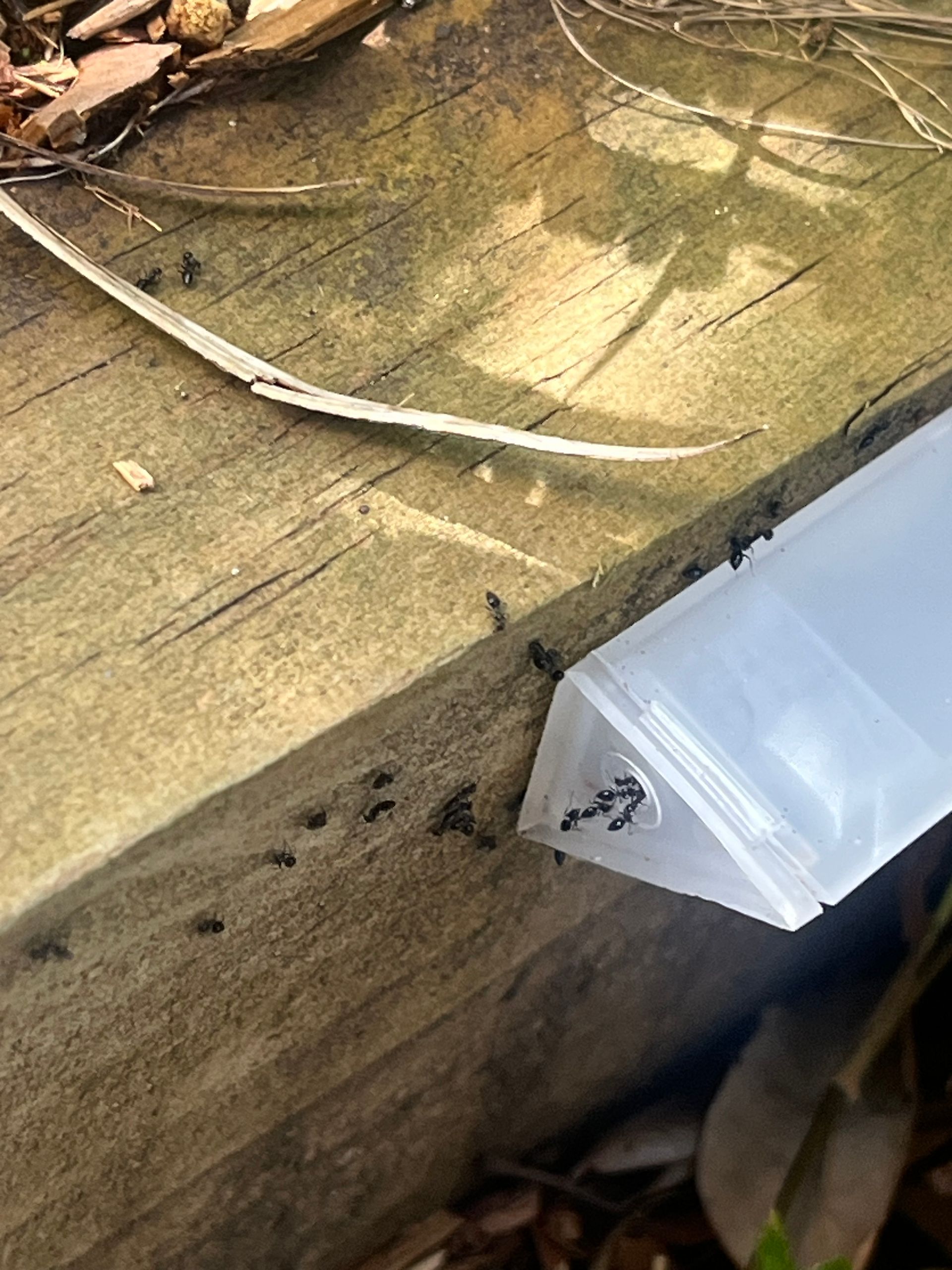
Even within professional treatment, a cheap or rushed single-visit programme is inadequate for an established infestation. The genus has documented low susceptibility to many commonly available insecticide formulations compared to other household pest ant species, making product selection critical.[12] Bait stations must be placed at sufficient density on active trails, replenished promptly when consumed, and integrated with complementary product types across multiple visits. Empty stations are a meaningful signal of colony pressure — gaps left by unrefilled stations stall the programme at its most critical phase.

What Effective Treatment Actually Looks Like


Effective management requires a coordinated multi-layer approach across several visits, targeting the colony from multiple angles simultaneously.[2,12] No single product type is sufficient alone.

Non-Repellent Residual Spray — Trunk Bands & Structural Barriers

Fast-acting products kill foraging workers before the active ingredient can be passed to the reproductive intercaste population via trophic eggs. The colony registers forager losses and continues. Studies confirm that commercial poison baits readily available to the public show poor attractiveness and efficacy against the Technomyrmex genus specifically — and that only slow-acting liquid bait formulations, applied consistently over multiple visits, can deliver sufficient toxicant via the trophic egg pathway to reach and suppress the reproductive core.[12,13]

Granular Bait — Garden Beds, Foliage & Tree Bases

Scattered through the foliage zone and garden beds to intercept the arboreal foraging columns that form the backbone of this species' activity.[4,9] This reaches workers in areas where conventional spray barriers cannot easily be applied without creating repellency risk. Formulations containing IGR's help reduce the reproductive activity of queens and brood.

Contact Insecticide Granules — Lawn & Ground Zone

Addresses ground-level foraging trails and treats opportunistic nesting in garden soil. Particularly important on properties where competing ant species have previously occupied nest sites — their removal can create vacancies that white-footed ants rapidly colonise.[10]

Slow-Acting Liquid Bait Stations — Directly on Active Trails

The backbone of the programme, and the method best supported by research for reaching the intercaste reproductive population via trophic egg transfer.[5,8] Slow-acting liquid bait in purpose-built stations, placed at high density along active trails, must be monitored and replenished regularly. Field studies confirm that community-wide management built around liquid bait stations, serviced on a consistent schedule, is capable of achieving meaningful suppression of Technomyrmex populations.[12]

The Bushland Reservoir Problem

Properties backing onto bushland face an additional challenge that no single treatment cycle can resolve: surrounding vegetation harbours established natural colonies that act as a continuous reservoir of reinvasion pressure.[6] Research on invasive ant management has shown that even effective treatment creates ecological vacuums that invasive species can rapidly re-exploit from adjacent unmanaged areas.[10] Ongoing monitoring and proactive bait station maintenance is the realistic long-term management strategy for these sites.[12]

Losing Ground? Call a Licensed Professional Early


If you've noticed small dark ants trailing up your trees, along fence lines, across your eaves, or into your roofline in the Port Macquarie area — particularly on a property close to bushland — get a licensed pest management technician (PMT) to assess it before it escalates. White-footed ants are significantly easier to suppress when addressed before the colony occupies multiple nest sites. Waiting, or attempting DIY, costs more in the long run — and the biology of this species means a delayed or inadequate response doesn't just fail to fix the problem: it actively makes it worse.

References


  1. Pest Management Professional. White footed house ant (Technomyrmex spp.) in Australia [Internet]. Professional Pest Manager Magazine (Australia); [cited 2026 Mar 08]. Available from: https://professionalpestmanager.com/ants/white-footed-house-ant/
  2. Pest Management Professional. The weird colony structure of the white-footed ant [Internet]. Professional Pest Manager Magazine (Australia); [cited 2026 Mar 08]. Available from: https://professionalpestmanager.com/pest-control-ants/research/the-weird-colony-structure-of-the-white-footed-ant/
  3. Warner J, Scheffrahn RH, Cabrera BJ. White-footed ant, Technomyrmex difficilis (=albipes) Forel [Internet]. University of Florida IFAS Extension, Featured Creatures EENY-273/IN551; 2002 [cited 2026 Mar 08]. Available from: https://edis.ifas.ufl.edu/publication/IN551
  4. Bolton B. Taxonomy of the dolichoderine ant genus Technomyrmex Mayr (Hymenoptera: Formicidae) based on the worker caste. Contributions of the American Entomological Institute. 2007;35(1):1–150. Compiled record available via AntWiki: https://www.antwiki.org/wiki/Technomyrmex_albipes
  5. Yamauchi K, Furukawa T, Kinomura K, Takamine H, Tsuji K. Secondary polygyny by inbred wingless sexuals in the dolichoderine ant Technomyrmex albipes. Behavioral Ecology and Sociobiology. 1991;29(5):313–319. doi:10.1007/BF00165955
  6. IUCN SSC Invasive Species Specialist Group. Technomyrmex albipes species profile [Internet]. Global Invasive Species Database (GISD); 2009 [cited 2026 Mar 08]. Available from: https://www.iucngisd.org/gisd/species.php?sc=1061
  7. Department of Primary Industries and Regional Development (DPIRD) Western Australia. White footed house ant (Technomyrmex spp.) fact sheet [Internet]. Government of Western Australia; [cited 2026 Mar 08]. Available from: https://www.dpird.wa.gov.au/siteassets/documents/biosecurity/invasive/pest-insects/ants/white-footed-house-ant---fact-sheet.pdf
  8. Chen JT-C, Tsai P-H, Wu W-L, Hsu Y-T, Liu C-C, Yang CC-S. Trophic-egg transfer in the black cocoa ant Dolichoderus thoracicus (Hymenoptera: Formicidae) and other dolichoderine ants in Taiwan. Myrmecological News. 2024;34:105–117. doi:10.25849/myrmecol.news_034:105
  9. Hsu Y-T, Liu C-C, Yang CC-S. Are LED lights driving the massive nuptial flight swarm of the tramp ant Technomyrmex albipes? Entomologia Experimentalis et Applicata. 2024;172(1):1–9. doi:10.1111/eea.13377
  10. Buczkowski G. Insecticide treatment of invasive ant colonies leads to secondary ant invasions and promotes the spread of invasive ants. Biological Invasions. 2024. doi:10.1007/s10530-024-03392-5
  11. Putri D, Cronin AL. Widespread and ongoing invasion by the ant Technomyrmex brunneus Forel in eastern Asia as elucidated by molecular data. Ecological Research. 2023;38:455–464. doi:10.1111/1440-1703.12383
  12. Sunamura E, Terayama M, Fujimaki R, Ono T, Buczkowski G, Eguchi K. Development of an effective hydrogel bait and an assessment of community-wide management targeting the invasive white-footed ant, Technomyrmex brunneus. Pest Management Science. 2022;78(10):4083–4091. doi:10.1002/ps.7027
  13. Terayama M, Sunamura E, Fujimaki R, Ono T, Eguchi K. A surprisingly non-attractiveness of commercial poison baits to newly established population of white-footed ant, Technomyrmex brunneus (Hymenoptera: Formicidae), in a remote island of Japan. Sociobiology. 2021;68(1):e5898. doi:10.13102/sociobiology.v68i1.5898
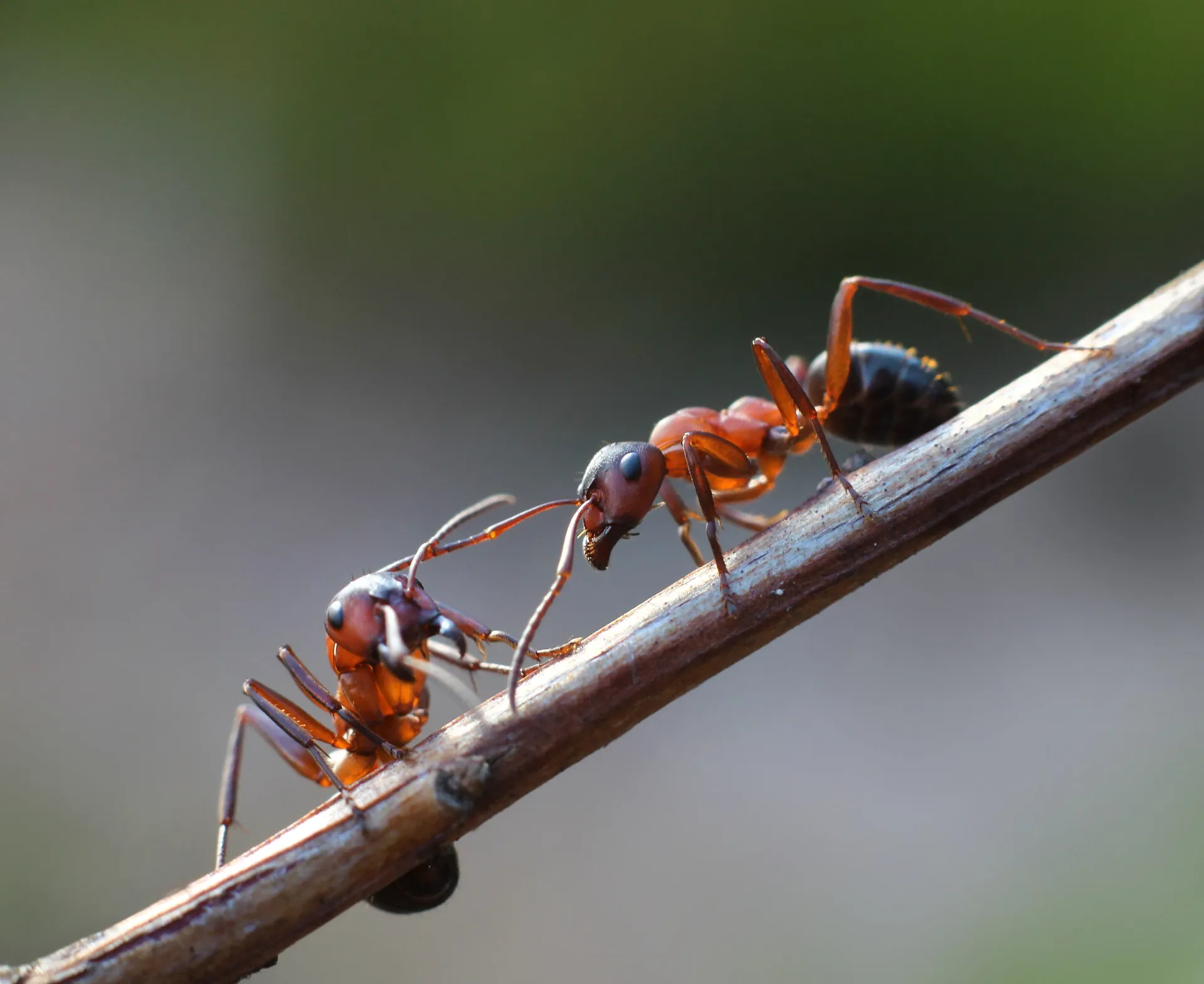
Two Red Ants on a Brown Twig, Antennae Touching — NatureWise Pest Control In Port Macquarie, NSW
By Clint Mcmanus March 11, 2026
Contents:
Brown Cockroach on a Textured White Surface — NatureWise Pest Control In Port Macquarie, NSW
March 11, 2026
A German cockroach freshly molted. Source: Pest help
Beetle With Orange and Cream Shell — NatureWise Pest Control In Port Macquarie, NSW
By Clint Mcmanus March 9, 2026
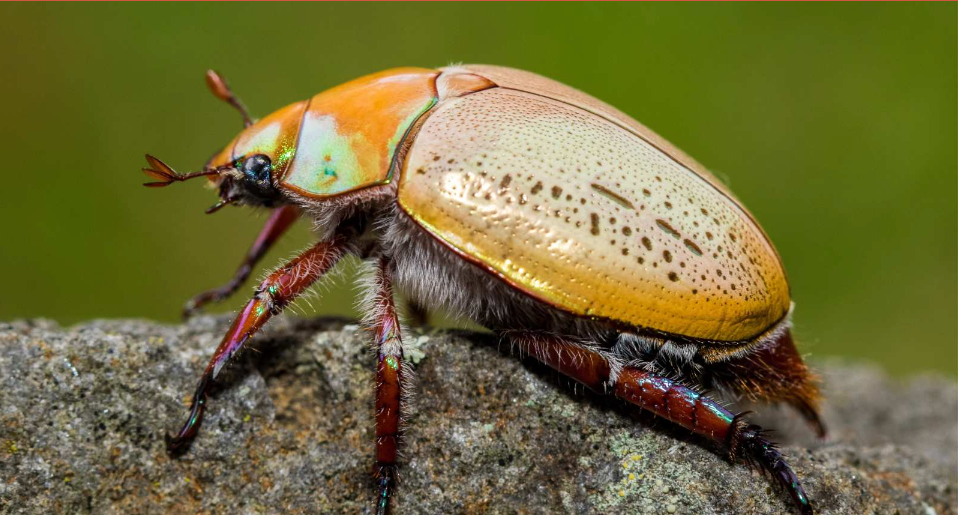
I remember a warm night on a road trip from Port Macquarie to Sydney. We pulled over at a rest stop under fluorescent street lights—and suddenly the air was full of buzzing. Dozens of Christmas beetles, drawn to the glare, flitted in waves. Their flight was unsteady, almost comical in its clumsiness—but mesmerising. When they landed, their shells glowed dusky gold or bronze; sometimes streaks of green or copper shimmered across their backs under the light.  That scene stirred something primal: a sense of summer, of wild nature brushing up against our human spaces. It felt like magic. Recently this year I saw two Christmas beetles near Port Macquarie. Not a swarm, not dozens—but two. It was surreal, and stirred hope. Does that mean they're coming back? Probably not. But perhaps it's a small sign that under the right conditions, they still find their way.
roof rat grey amongst green foliage rodent control port macquarie
By Clint Mcmanus March 8, 2026
As temperatures begin to drop across Australia, rodents such as rats and mice start searching for warm, sheltered places to nest. Effective rodent control...
Photographs of the rattle ant (Polyrhachis australis), showing glossy black worker ant approximately
By Clint Mcmanus February 15, 2026
Learn about Black Weaver Ants (Polyrhachis australis) in Port Macquarie, Kempsey, Wauchope & Lake Cathie, and how to tell them apart from carpenter ants.
Cockroaches Crawling on a White Surface — NatureWise Pest Control In Port Macquarie, NSW
By Clint Mcmaus September 27, 2025
Discover how to identify and eliminate German cockroaches in Lake Cathie. Expert pest control tips for getting rid of German cockroach infestations in Port Macquarie.
Detailed Drawing of a Flea — NatureWise Pest Control In Port Macquarie, NSW
By Clint Mcmaus September 27, 2025
Discover effective flea treatment advise for your home in Port Macquarie. Learn how veterinary flea treatment for dogs can protect your pets and advise for treating your home for infestations.
Garden With Pink Flowers and Trees — NatureWise Pest Control In Port Macquarie, NSW
By Clint Mcmaus September 26, 2025
Relying on chemical pesticides may give short‑term relief but those products often harm the predators and pollinators that naturally suppress pests. Modern ecological landscaping focuses on creating habitats that encourage native birds, frogs, bats and beneficial insects like lady beetles, hoverflies, lacewings and parasitoid wasps to thrive.
Textured Concrete Wall With Openings — NatureWise Pest Control In Port Macquarie, NSW
By Abbie W. September 18, 2025
Protect your home with non-toxic options and promote safe rodent control measures. Discover effective non-chemical control measures in Port Macquarie.
Spotted Ladybird on Leaf — NatureWise Pest Control In Port Macquarie, NSW
By Clint Mcmaus September 13, 2025
Discover the ultimate guide to beneficial insects for natural pest control in Port Macquarie and NSW gardens. Learn about beneficial insects and where to buy them.
Show More