Polyrhachis australis in Port Macquarie & Surrounds: Black Weaver Ants (Rattle Ants) You’re Seeing More Often
Polyrhachis australis
(Black Weaver Ants/Rattle Ants, family Formicidae)
If you’re a property owner, gardener, or tradie working around Port Macquarie, Kempsey, Wauchope, Lake Cathie or nearby NSW coastal towns, you might have noticed shiny black ants on trees, shrubs, fences or job sites — often with more than one nest present. These are likely Polyrhachis australis, commonly known as Black Weaver Ants or Rattle Ants.


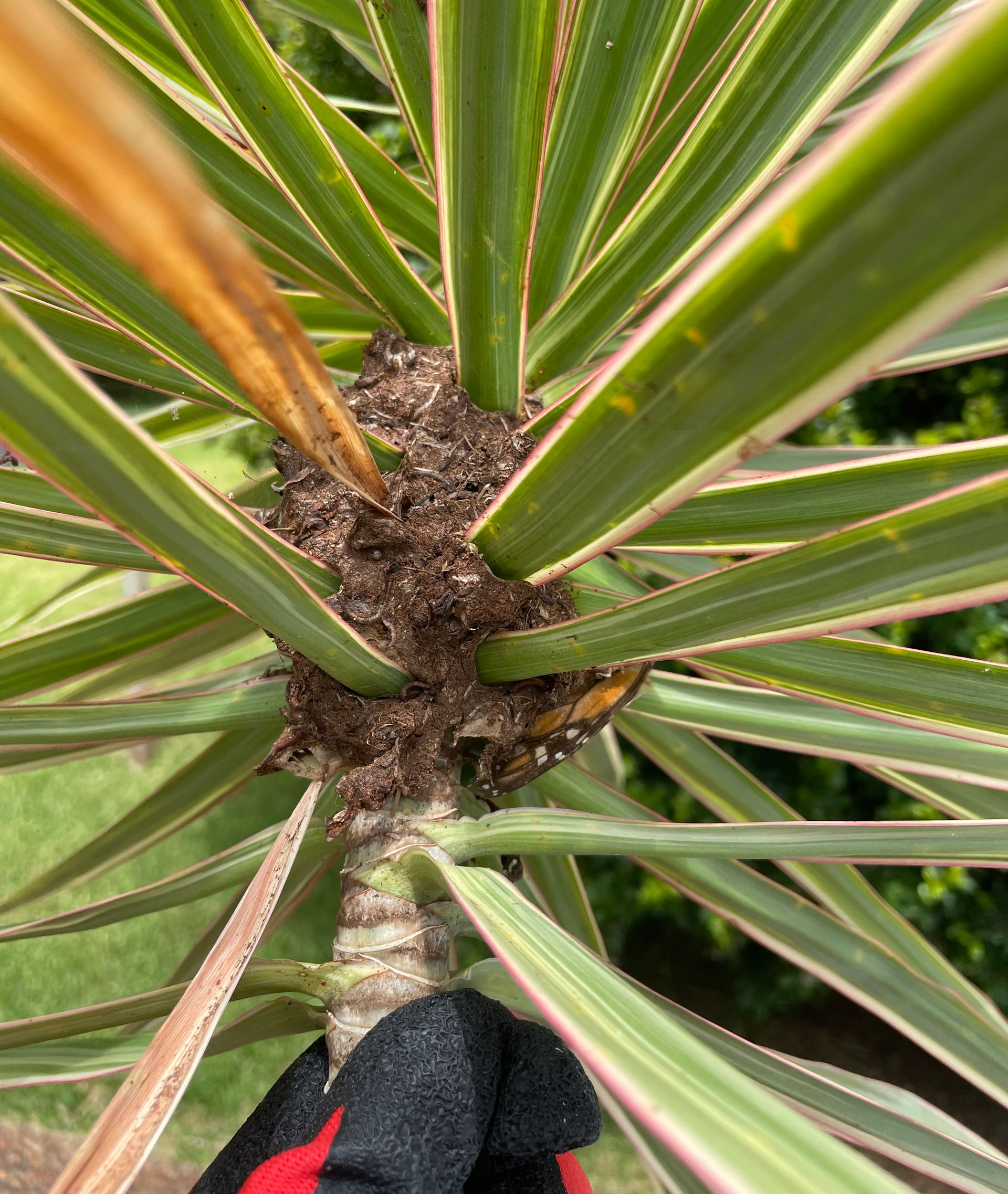
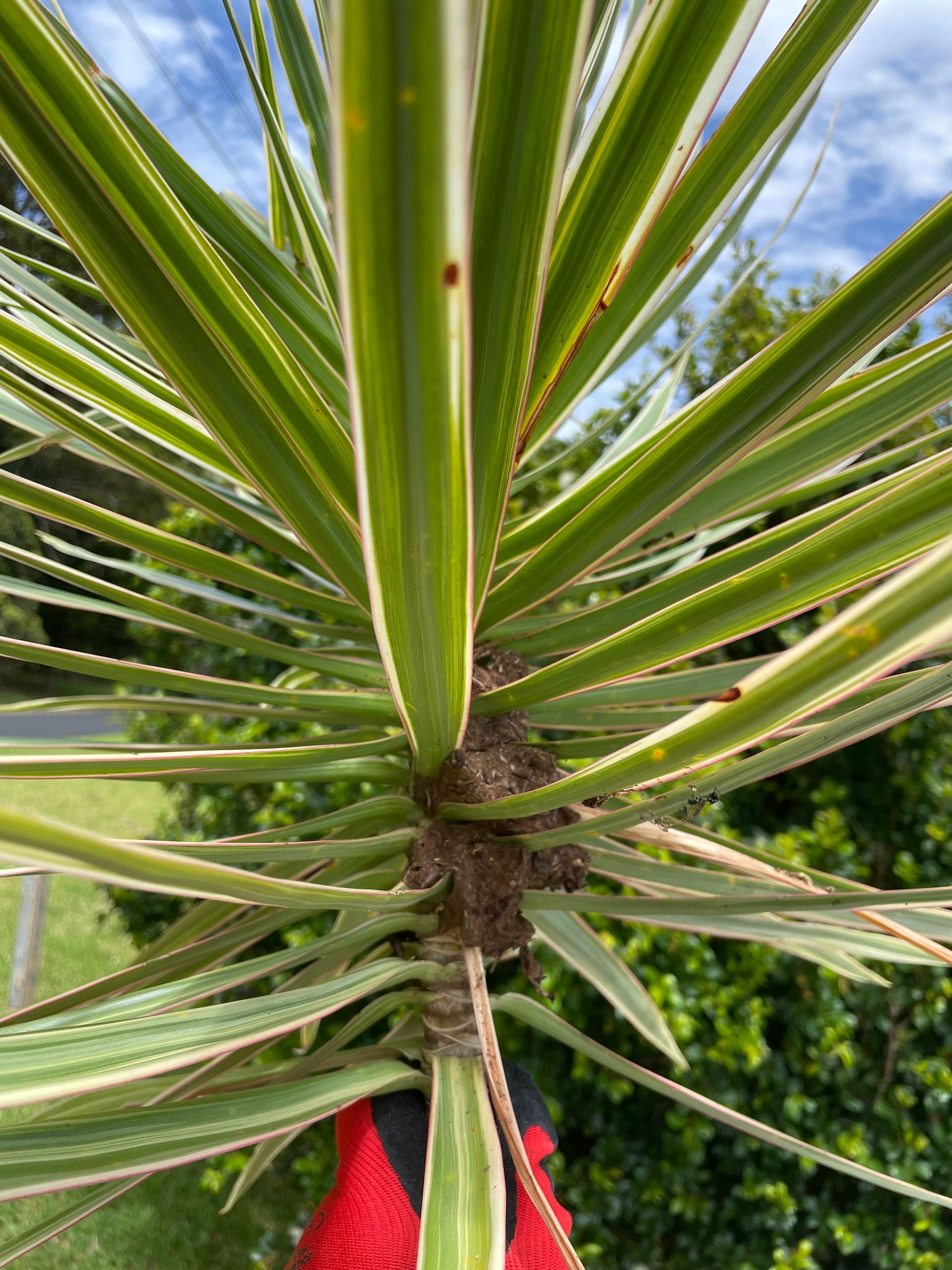
Photograph of P. australis nest between Dracaena leaves, made of leaf-litter and insect carcasses bound together with larval silk.
These ants are part of the Formicidae family and are distinctive for their woven leaf-type nests built on vegetation or structures. Rather than excavating in wood like true carpenter ants (Camponotus species), Polyrhachis australis constructs arboreal nests from dry plant material and larval silk (Robson & Kohout 2007, Brisbane Insects 2024), sometimes high above the ground.

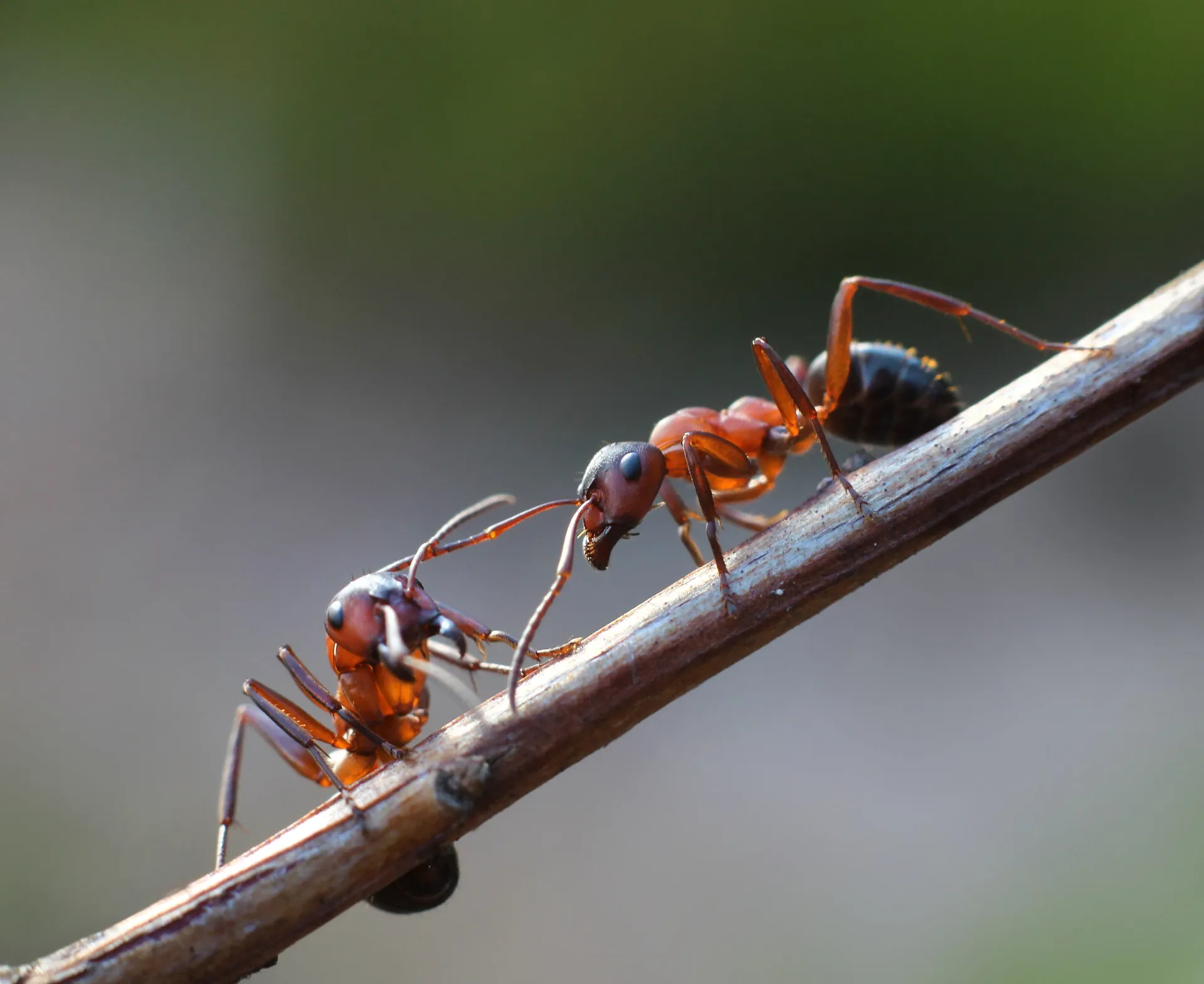
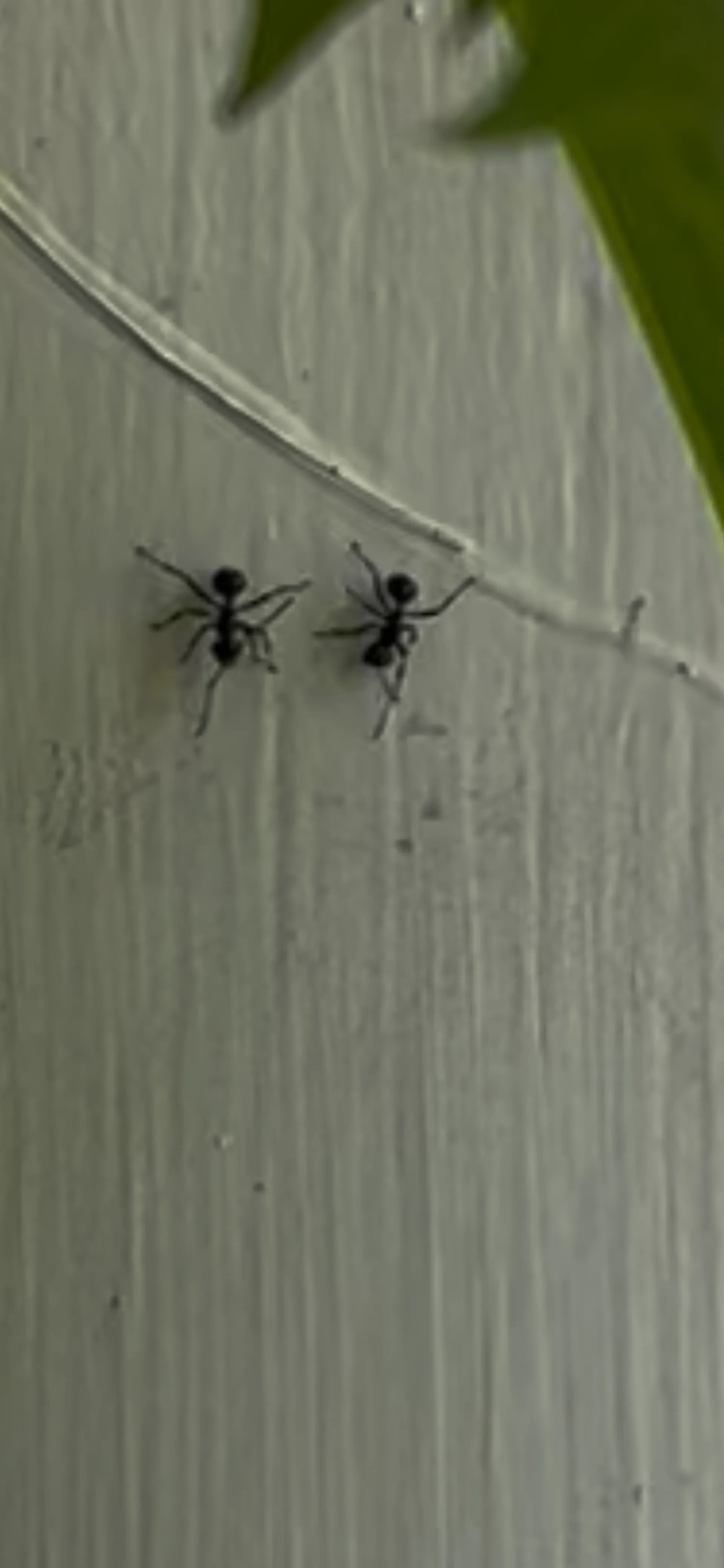
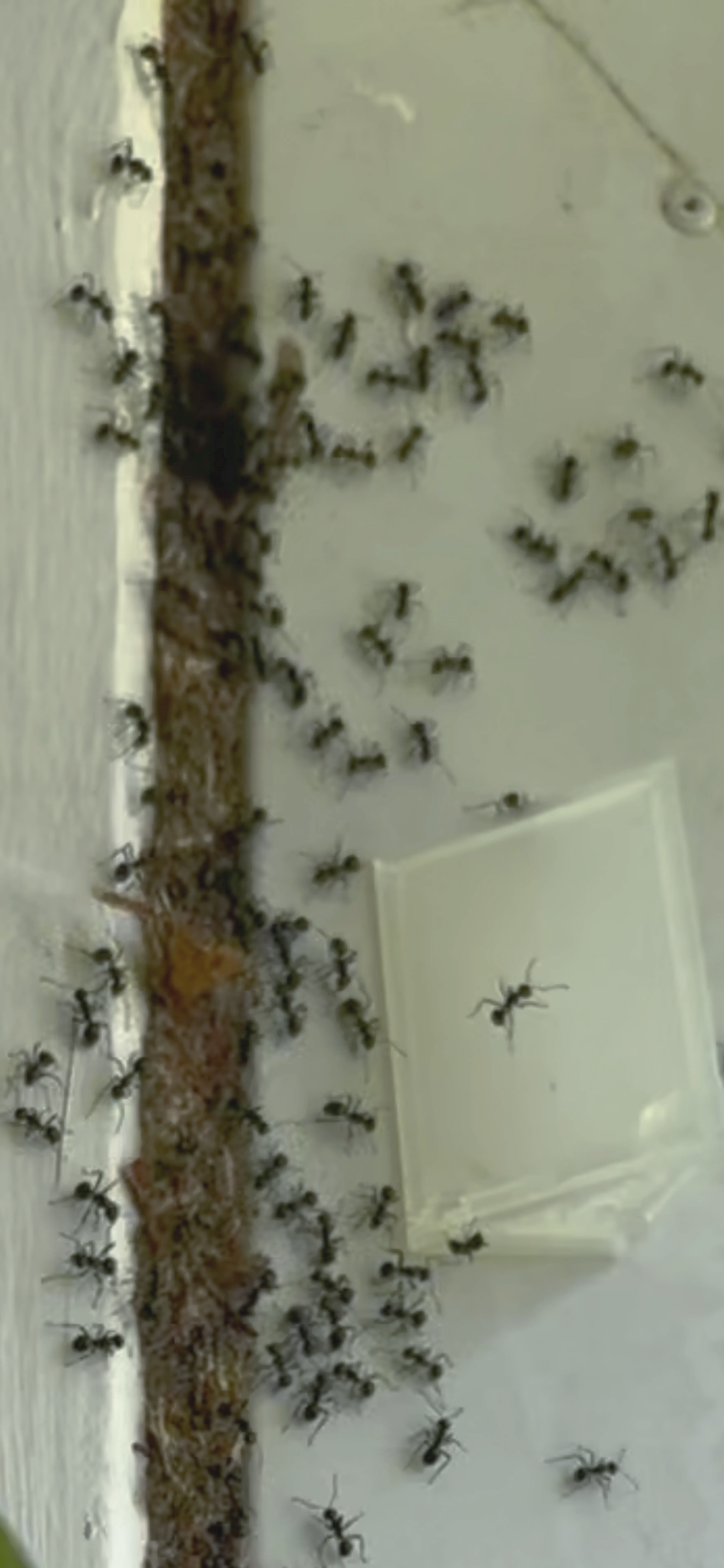
Close-up of ants (Polyrhachis australis) on wooden post

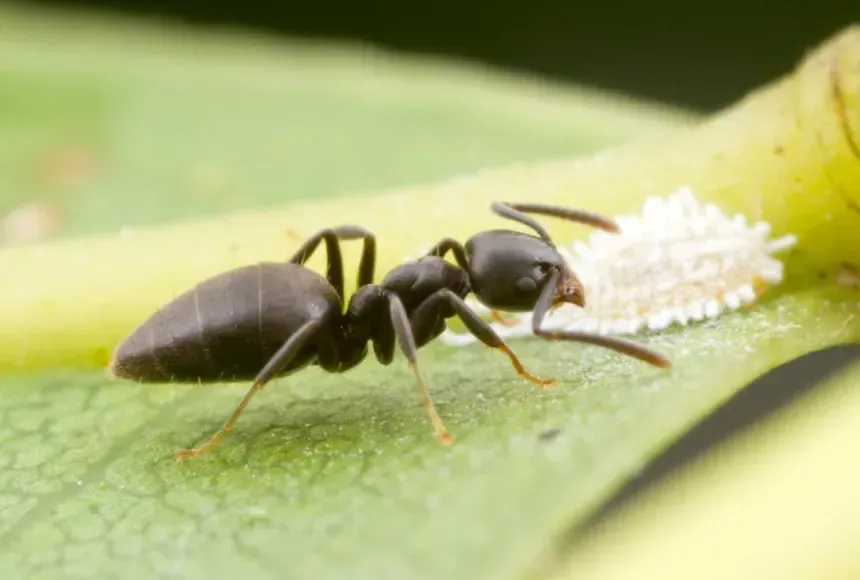
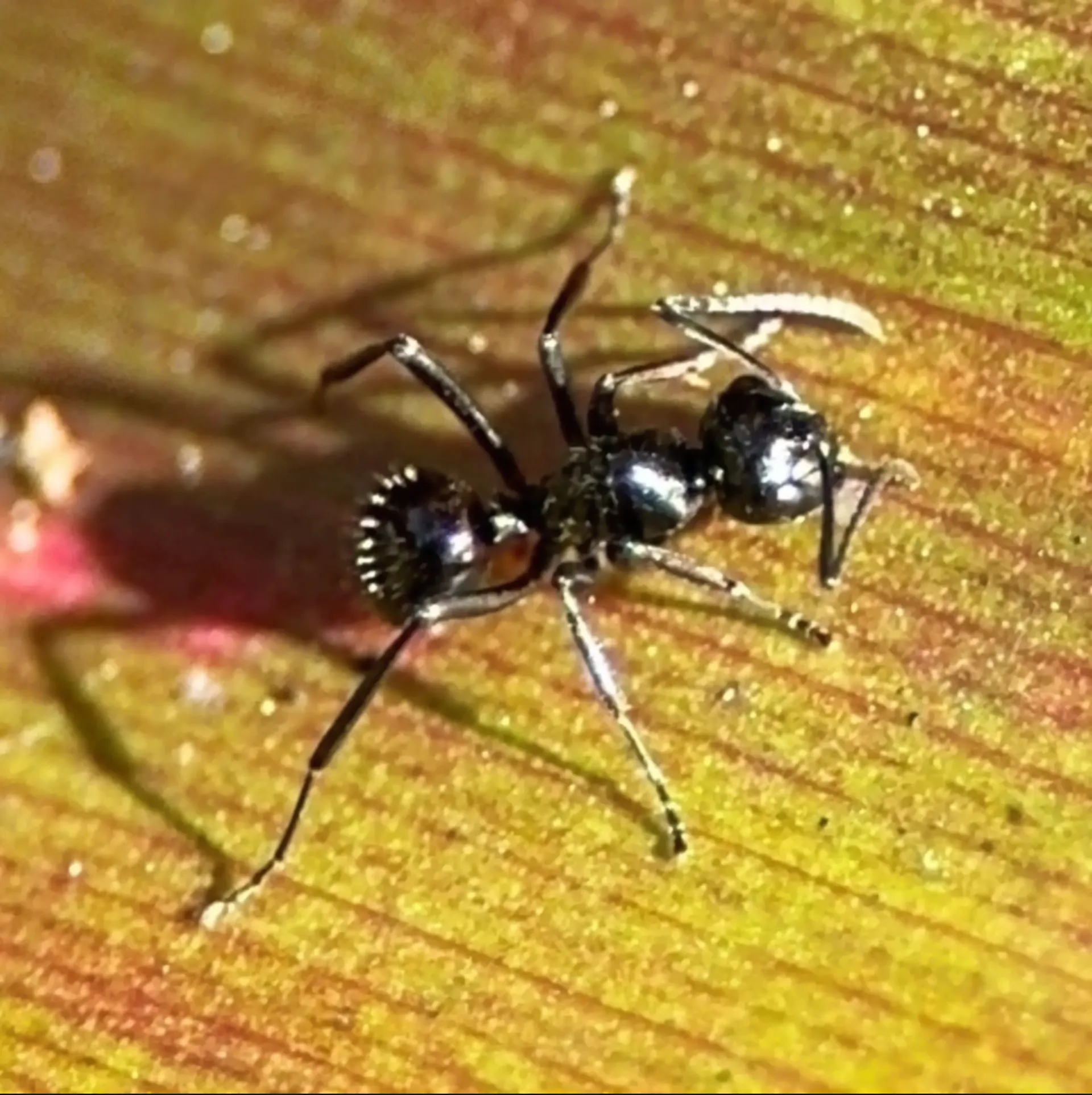
Photographs of the rattle ant (Polyrhachis australis), showing glossy black worker ant approximately 7 mm in body length with black legs and antennae, typically found wandering on plant leaves and building nests by weaving leaves and leaf-litter together with larval silk.
Source: www.naturemapr.org/species/10781
How To Identify Ants
- Size: Small to medium (about 7–8 mm).
- Colour: Glossy black body with black legs and antennae.
- Shape: mostly monomorph, no big heads on soldiers compared to workers, like seen with Northern Brown (Big Headed) ant.
- Behaviour: Often seen dispersed on leaves and branches and in garden beds; when their nest is disturbed, they may quickly emerge and make a distinctive “rattle” noise across surfaces.
- Environment: Prefer shaded, moist locations with dense foliage. nests near bodies of water can tolerate part shade. Nests often found waist to head hight from the ground.
Multiple Nests on Properties

Close-up of ants (Polyrhachis australis) gathered around their primary nest and bait station outside front of house.

Second P. australis nest built between Dracaena leafs, found in pool area on property.
Unlike ground-nesting pest ants, P. australis typically nests above ground on vegetation or structures. Colonies may establish multiple nests on the same plant or across nearby structures, a behaviour documented in Australian Polyrhachis species (Robson & Kohout 2007).
P. australis belong to the family Formicidae, that display a wide range of nesting strategies, including arboreal nest construction. (CSIRO 2024)
Not Carpenter Ants
Black Weaver Ants are frequently mistaken for carpenter ants (Camponotus spp.) because both may appear black and are found around buildings. However, Polyrhachis australis does not excavate timber. Its nests are constructed externally from leaves and debris rather than by hollowing wood (Kohout 2012; Kohout 2013). Carpenter ants, by contrast, nest by tunnelling into softened or decaying timber.
Correct identification is important in coastal NSW pest management, as Black Weaver Ants are generally arboreal and non-destructive, while carpenter ants may indicate moisture-damaged structural timber (Kohout 2012).
Prevention Strategies
Established nests should not be removed before proper treatment. Prevention strategies include cutting back foliage, especially branches overlapping between trees or shrubs in contact with structures (fence, posts and railings). Raking leaf litter from garden beds and reducing exposed sources of water can also deter nesting activity.
Do you have an ant infestation?
Contact us today for a free inspection and quote!
References
- Brisbane Insects 2024 Brisbane Insects. Rattle Ant Polyrhachis australis [Internet]. Brisbane: Brisbane Insects; 2024 [cited 2026 Feb 15]. Available from: <a href="https://www.brisbaneinsects.com/brisbane_ants/RattleAnt.htm">https://www.brisbaneinsects.com/brisbane_ants/RattleAnt.htm</a>
- CSIRO 2024 CSIRO. Family Formicidae (ants) [Internet]. Canberra: CSIRO; 2024 [cited 2026 Feb 15]. Available from: <a ref="https://www.ento.csiro.au/education/insects/hymenoptera_families/formicidae.html">https://www.ento.csiro.au/education/insects/hymenoptera_families/formicidae.html
- Kohout RJ 2013 Kohout RJ. Revision of Polyrhachis (Hagiomyrma) Wheeler [Internet]. Memoirs of the Queensland Museum – Nature. 2013;56(2):487–577. Available from: <a href="https://doi.org/10.17082/j.2204-1478.56.2.2013-10">https://doi.org/10.17082/j.2204-1478.56.2.2013-10
- Kohout RJ 2012 Kohout RJ. A review of the Australian Polyrhachis ants of the subgenera Myrma, Myrmatopa, Mymothrinax and Polyrhachis [Internet]. Memoirs of the Queensland Museum – Nature. 2012;56(1):25–59. Available from: <a href="https://doi.org/10.17082/j.2204-1478.56.1.2012-04">https://doi.org/10.17082/j.2204-1478.56.1.2012-04
- Robson & Kohout 2007 Robson SKA, Kohout RJ. A review of the nesting habits and socioecology of the ant genus Polyrhachis Fr. Smith [Internet]. Asian Myrmecology. 2007;1:81–99. Available from: <a href="https://eprints.jcu.edu.au/2602/">https://eprints.jcu.edu.au/2602/
- Downes & Harvey 2016 Downes MF, Harvey M. The spider Oecobius concinnus Simon (Araneae: Oecobiidae) in nests of the ant Polyrhachis australis Mayr (Hymenoptera: Formicidae) in Townsville, Queensland: A new distribution record [Internet]. Australian Entomologist. 2016;43(1):31–34. Available from: <a href="https://research-repository.uwa.edu.au/en/publications/the-spider-oecobius-concinnus-simon-arachnida-oecobiida-in-nests-o">https://research-repository.uwa.edu.au/en/publications/the-spider-oecobius-concinnus-simon-arachnida-oecobiida-in-nests-o