

Rat Baits Just Got Restricted — What Port Macquarie Residents Need to Know | Rodent Control
DIY Rat Control in Port Macquarie Just Got More Complicated...

Australia's Rat Bait Laws Have Changed — Here's What It Means for You
If you've been relying on hardware store rat bait to handle a rodent problem at your Port Macquarie home or business, there's something important you need to know. Australia's pesticide regulator has introduced new legally enforceable restrictions on some of the most commonly sold rodenticides — and the changes came into effect on 24 March 2026.[1]
What Are SGARs and Why Do They Matter?
Rodenticides fall into two main categories: first-generation anticoagulant rodenticides (FGARs) and second-generation anticoagulant rodenticides (SGARs).[1,3] Both work by preventing blood clotting, but they differ significantly in potency and persistence.[3]
SGARs — which include brodifacoum, bromadiolone, difenacoum, difethialone and flocoumafen — are single-feed products, meaning a rodent only needs to consume the bait once for a lethal dose.[1] FGARs require multiple feeds over several consecutive days to achieve the same result.[1] That higher potency is precisely why SGARs became so widely used, and precisely why they've become a serious problem.
After a rodent consumes SGAR bait, the poison remains in its body tissues for months — up to a year in some cases.[2] When a native predator such as an frogmouth owl, quoll or goanna eats that rodent, it ingests the accumulated poison too. This is known as secondary poisoning, and it is well documented in predators across Australia.[2,3] Research has found SGARs present in 83% of powerful owls tested,[4] and in 50% of native marsupial carnivores sampled across the country.[5] Studies on predatory birds in south-east Queensland have similarly detected anticoagulant rodenticide residues in the majority of birds examined post-mortem.[6]
What's Changed Under the New Rules?
Following a multi-year review, the Australian Pesticides and Veterinary Medicines Authority (APVMA) certified in March 2026 that SGARs should be declared restricted chemical products, limiting their supply and use to licensed and authorised users.[1] In parallel, all SGAR product registrations have been suspended for a minimum of one year from 24 March 2026, with the following conditions now legally enforceable nationwide:[1]
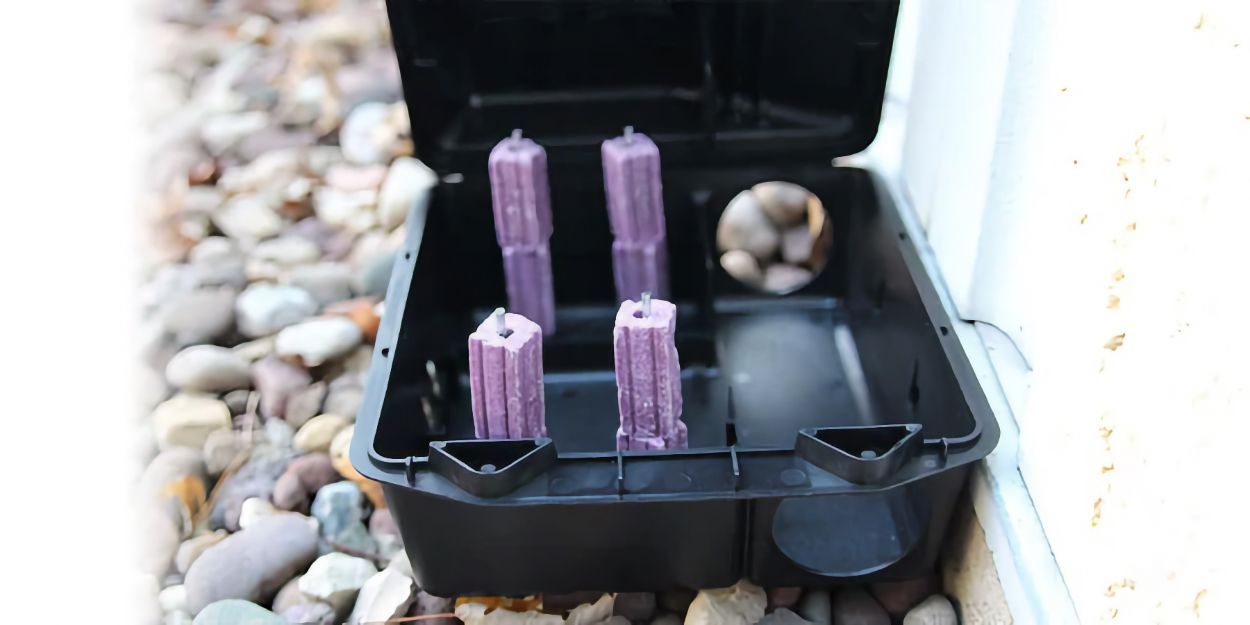
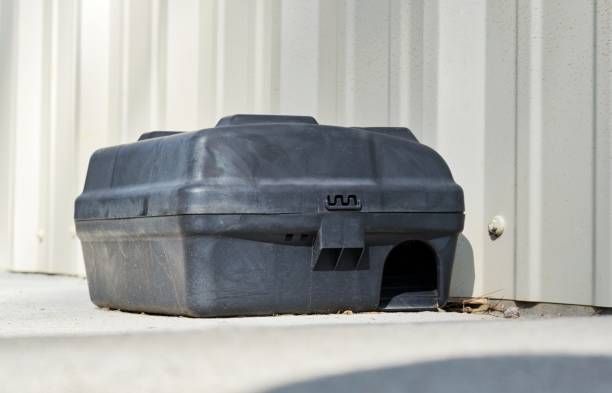
- All rodenticides must be placed in secured, lockable, tamper-resistant bait stations
- For mice: bait stations must be placed inside buildings only — no external use
- For rats: bait stations must be placed within 2 metres of a building
- SGAR use is limited to a maximum of 35 days per treatment without reassessment
- Carcasses must be searched for and appropriately disposed of
Importantly, this is not a full ban — SGARs have not been cancelled. But the conditions of use now override product labels and are enforceable under state and territory legislation.[1]
What Does This Mean for DIY Rodent Control?
Here's the part most households don't realise: virtually every rat and mouse bait sold in supermarkets and hardware stores in Australia has been a second-generation product. Brands commonly found on retail shelves contain active ingredients like brodifacoum or bromadiolone — both SGARs.
For the general public, this means that almost every DIY bait option you've previously reached for is now subject to these restrictions or is being pulled from retail shelves altogether.[1,8] Major retailers including Bunnings have committed to removing SGAR products from sale by 30 June 2026.[7]
The restrictions also mean that unsecured or externally placed bait — the way most people have used these products at home — is no longer permitted.
When Should You Call a Licensed Pest Controller?
Professional pest managers in NSW can still legally access and use both first- and second-generation rodenticides, provided they comply with the updated conditions of use.[1,8] A licensed pest management technician will:
- Correctly identify whether you have a rat or mouse problem (they require different treatment approaches)
- Deploy bait within compliant, tamper-resistant stations
- Conduct follow-up inspections and carcass searches as required
- Assess whether treatment is working and review after 35 days
- Advise on exclusion and habitat modification to reduce re-infestation
If you're in Port Macquarie or the surrounding Mid North Coast and you're dealing with a rodent infestation — whether at home, in a commercial kitchen, a warehouse, or on a rural property — the safest and most effective approach is now more clearly a job for a licensed professional.
Reach out for an inspection and quote
Learn more about rodent control
References
- Australian Pesticides and Veterinary Medicines Authority (APVMA). APVMA certifies that second generation anticoagulant rodenticides should be restricted chemical products. 12 March 2026. Available at: https://www.apvma.gov.au/news-and-publications/news/apvma-certifies-second-generation-anticoagulant-rodenticides-should-be-restricted-chemical-products
- White J, Cooke R. Household rat poisons found to be 'unacceptable risk' to native animals. So why aren't they banned? The Conversation. 2 February 2026. Available at: https://theconversation.com/household-rat-poisons-found-to-be-unacceptable-risk-to-native-animals-so-why-arent-they-banned-272346
- Australian Pesticides and Veterinary Medicines Authority (APVMA). Rodenticides. Available at: https://www.apvma.gov.au/resources/frequently-searched-chemicals/rodenticides
- Cooke R, Whitely P, Jin Y et al. Widespread exposure of powerful owls to second-generation anticoagulant rodenticides in Australia spans an urban to agricultural and forest landscape. Science of the Total Environment. 2022; 819: 153024.
- Pay JM et al. Widespread detection of second generation anticoagulant rodenticides in Australian native marsupial carnivores. Science of the Total Environment. 2025. doi: 10.1016/j.scitotenv.2025.00467X
- Chaber AL et al. Evaluating sublethal anticoagulant rodenticide exposure in deceased predatory birds of South-East Queensland, Australia. Discover Toxicology. 2024. doi: 10.1007/s44339-024-00016-4
- Wild Island. APVMA Moves to Restrict SGAR Rat Poisons. 13 March 2026. Available at: https://wildisland.com.au/2026/03/13/apvma-restricts-sgar-rat-poisons/
- Agserv Pest Control Supplies. Second Generation Anti-Coagulant Rodenticide Review — The Real Impact. 31 March 2026. Available at: https://www.agserv.com.au/blog-sgar-review-the-real-impact/