
German Cockroaches: How to Identify Them & How Do You Get Rid Of Them - German Cockroach in Lake Cathie, Pest Control Port Macquarie
- Clint Mcmaus

- Sep 27
- 5 min read

German Cockroaches: How to Identify Them & How Do You Get Rid Of Them.
Table of Contents
Introduction
German cockroaches (Blattella germanica)¹ are one of the most common pest cockroaches found in households across Australia, including Lake Cathie. They thrive in warm, humid conditions and are especially problematic in kitchens and bathrooms where food and moisture are abundant²,³. Correct identification is important because their behaviour, size, and rapid reproduction make them far harder to control than larger outdoor species.
Physical Appearance


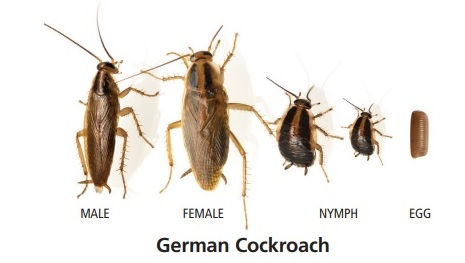
Adult German cockroaches are relatively small, usually measuring 12–16 mm in length⁴,⁵,⁶. They are light brown to tan in colour, with two distinct dark parallel stripes running lengthwise behind the head (on the pronotum)²,⁷.
Other key features include:
Adults have wings but rarely fly.
Nymphs (juveniles) are darker in colour, smaller, and still show faint striping.
Unlike larger cockroaches such as Australian or American species, German cockroaches rarely exceed 16 mm⁴,⁶.

Behaviour and Hiding Places
German cockroaches are nocturnal and often scatter when lights are turned on². They are fast runners and prefer to remain hidden during the day. In high and extreme infestations roaches may be seen scurrying about at all hours.
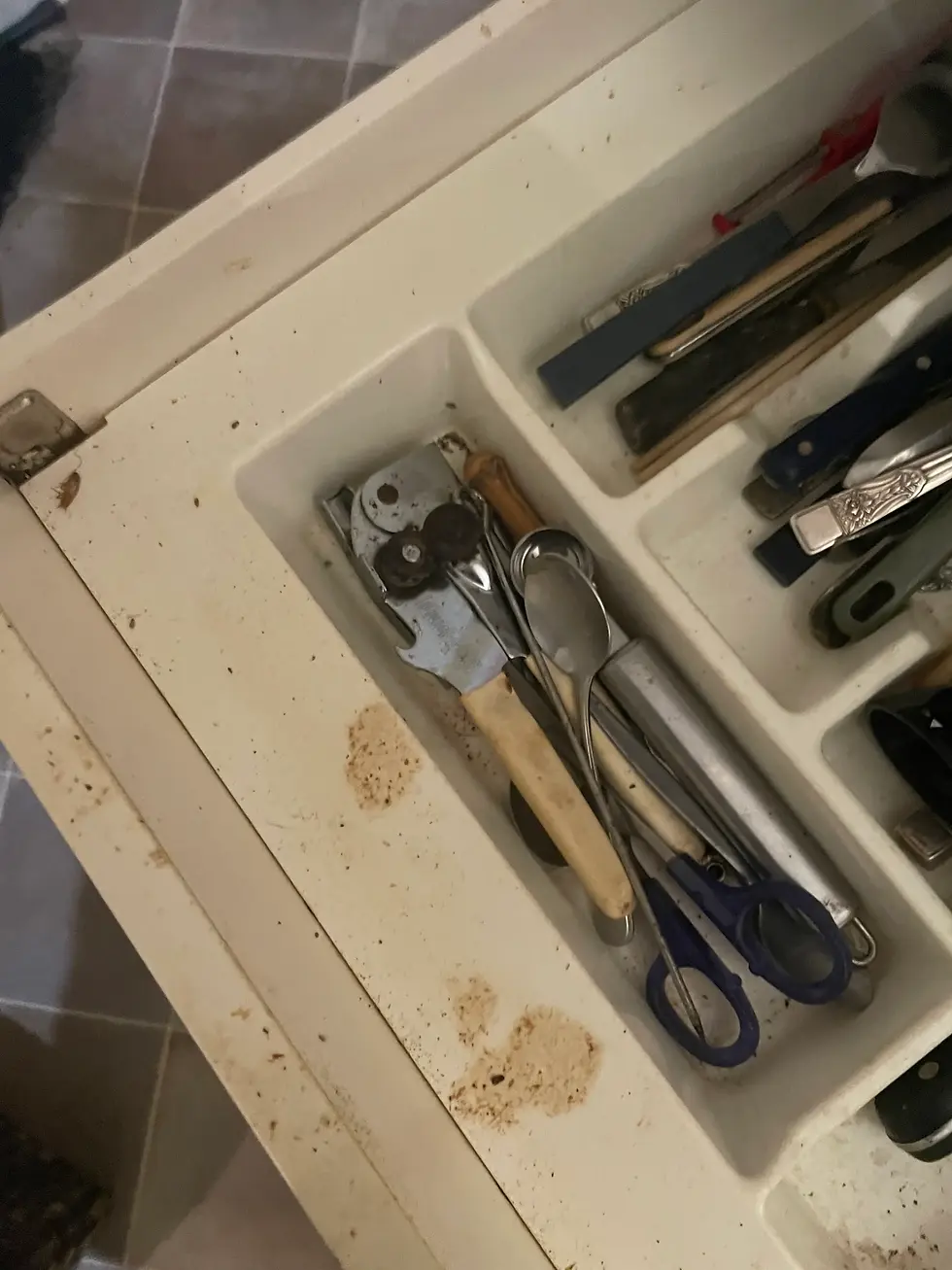
German cockroaches primarily infest kitchens where food, heat and water sources are prevalent. Its important to maintain hygiene, as poor hygiene levels can facilitate population growth resulting in high and extreme infestations. High and extreme infestations are known to persist throughout the year, with roaches extending throughout the entire house.
They are commonly found:
Under and behind fridges, dishwashers, and ovens²,⁸
Inside cupboards, particularly under sinks²
Within electrical appliances like microwaves and kettles⁷
In cracks, crevices, and warm gaps close to food sources²

Their flattened bodies allow them to squeeze into very narrow spaces that sprays or surface treatments may not reach⁸.
Reproduction and Infestation Growth

German cockroaches reproduce extremely quickly. A single female carries an egg capsule (ootheca) containing up to 40 eggs, which hatch within weeks⁹,¹⁰. Because each female can produce multiple capsules in her lifetime, infestations can grow exponentially if left untreated.


This rapid breeding is one of the main reasons they are considered such a difficult pest to manage in Australian households⁹. During the hotter months pest activity is known to increase significantly, especially in unsanitary environments.

Once a large population is established in a building, it is much more difficult to control. Often single pest treatments are insufficient in curbing high level infestations, over-reliance on the same pesticide active ingredients by technicians also result in resistance to chemical treatments.
For successful population reduction and control increased hygiene is required along with professional use of low-toxicity targeted pesticides as well as IGR's¹⁷. A professional approach often involves careful selection of chemical active ingredients; starting with new formulations with less history of over-use in the industry, and incorporating chemical rotation into a multi-treatment action plan. Actives like Fipronil¹⁴ and Indoxacarb¹⁵ have been on the market for years and may have reduced effectiveness if overused.
Professional pest technicians compare pesticide formulations. Often chemical companies change their pesticide formulations, with new products featuring updated bait matrixes and attractants for these common active ingredients to boost effectiveness¹⁶.
For most cases of high infestations, three targeted treatments with different chemical actives each time, including IGR's, is sufficient in reducing the roach population. This approach reduces the population in stages and by different mechanisms with many individuals dying in the first hours and days and a significant reduction in juveniles and breeding population in the following weeks and months.
Our German cockroach plan often results in a 90-99% population reduction success rate, clients that implement increased hygiene and other agreed upon non-chemical controls have given feedback that no german cockroaches have been sighted many months later.
Health and Hygiene Risks

German cockroaches pose significant health risks. Studies in Australia have found they can carry bacteria such as Salmonella and E. coli, which contaminate food and surfaces¹¹. Their droppings, shed skins, and secretions can also act as allergens, contributing to asthma and allergic reactions, especially in children¹².

For residents, this makes infestations a concern for both health and property hygiene. Not only do droppings and shed-skins present a health risk, they also create a strong unpleasant musk smell, especially noticeable on infested electronics.
Specialized HEPA pest vacuuming can be implemented to reduce roach population to reduce the need for pesticides, and to help remove the droppings and shed-skins respiratory risks and accompanying smell.

Differentiation from Other Common Species
Identifying German cockroaches correctly helps ensure the right treatment.
German cockroach (Blattella germanica) – Small (12–16 mm), light brown, two stripes, indoor pest¹,⁴
Australian cockroach (Periplaneta australasiae) – Large (30–35 mm), reddish-brown, yellow markings on thorax, often outdoors¹³
American cockroach (Periplaneta americana) – Very large (up to 50 mm), reddish-brown, often in drains¹³
Smoky brown cockroach (Periplaneta fuliginosa) – Uniform dark brown, outdoor flyer¹³


In many locations around Australia, German cockroaches are almost always the species responsible for persistent kitchen infestations²,⁸. Correct Identification will result in better success when asking "German Cockroaches: How to Identify Them & How Do You Get Rid Of Them".
Conclusion
German cockroaches are smaller than other cockroach pests but reproduce faster and hide in harder-to-reach places. Their identification is marked by their 12–16 mm size, light brown colouring, and two dark stripes behind the head. For Lake Cathie homes, catching infestations early is critical to prevent rapid spread and health risks.
Professional inspection and treatment ensure that the problem is correctly identified and managed.
References
NSW Department of Primary Industries – German cockroach: https://www.dpi.nsw.gov.au/biosecurity/insect-pests/german-cockroach
Queensland Government – Business Queensland German cockroach fact sheet: https://www.business.qld.gov.au/industries/service-industries-professionals/service-industries/pest-management/german-cockroach
Australian Museum – German cockroach: https://australian.museum/learn/animals/insects/german-cockroach
Envu Australia – German cockroach pest profile: https://www.au.envu.com/pest-management/whattocontrol/german-cockroach
CSIRO – Household pests: https://www.csiro.au/en/research/natural-environment/animals/insects/household-pests
BugGuide – German cockroach identification: https://bugguide.net/node/view/70688
Dimensions – German cockroach size and features: https://www.dimensions.com/element/german-cockroach-blattella-germanica
Safe Pest Control Sydney – German cockroach guide: https://safepestcontrol.net.au/german-cockroach-identification-prevention-treatment
Department of Health WA – Cockroaches health fact sheet: https://www.healthywa.wa.gov.au/Articles/A_E/Cockroaches
University of Sydney – Insecticide resistance in German cockroaches: https://www.sydney.edu.au/science/our-research/research-areas/entomology
Australian Government – Cockroaches as carriers of disease: https://www.outbreak.gov.au/resources/cockroaches
Asthma Australia – Cockroach allergens and asthma: https://asthma.org.au/about-asthma/triggers/cockroaches
QLD Health – Cockroach identification: https://www.health.qld.gov.au/news-events/news/pest-cockroaches-australia
APVMA Fipronil Review Scope Document - September 2003: https://www.apvma.gov.au/sites/default/files/publication/15171-fipronil-review-scope-document.pdf
Sundew AbolishPRO Cockroach Gel label 2021: https://www.sundewsolutions.com.au/wp-content/uploads/2020/10/Sundew-AbolishPRO-Cockroach-Gel-label-2021.pdf
Deskera - Developing New Pest Control Chemical Formulations, Niti Samani, Blog post, accessed September 2025: https://www.deskera.com/blog/developing-new-pest-control-chemical-formulations/
My Bug Guardian - IGR for Roaches, Anon, Blog post, Published: November 30, 2020: https://mybugguardian.com/igr-for-roaches/


This essay presents a convincing and perceptive argument. The focus on interactive digital services demonstrates their growing significance in today's world. For those who want to know more about this, there is further information on the website . The tone of the piece is incredibly well-balanced.