
Common Pest Ants in Australia: ID Guide & Control | Port Macquarie
- Clint Mcmaus

- 3 days ago
- 29 min read
Updated: 2 days ago

Common Pest Ants in Australia: A Comprehensive Ant Identification Guide | pest control port macquarie.
Contents:
Understanding Australia's Ant Problem
Ants are among the most successful insects on Earth, with their highly organised social structures and remarkable adaptability allowing them to thrive in virtually every terrestrial habitat. Australia is home to approximately 1,275 described ant species across 103 genera and 10 subfamilies, though researchers estimate the actual diversity could exceed 6,500 species, with only one in five currently described.[1] While the vast majority of these species pose no threat to humans or property, a small number have earned their reputation as significant pests, making ants the number one crawling insect pest globally.[2]

The Australian Museum notes that ants' success stems largely from their sophisticated chemical communication systems—the most complex in the animal kingdom—which enables colonies to work together to accomplish tasks beyond any individual insect's capability.[3] This same social complexity, however, makes pest ants particularly challenging to control. Unlike solitary insects that can be eliminated individually, ant colonies function as superorganisms, with queens continuously producing workers to replace any that are killed. Effective control requires targeting the entire colony structure, particularly the reproductive queens who serve as the colony's egg production units.[2]
In domestic settings, pest ants primarily cause nuisance issues through food contamination and occasional biting or stinging of residents and pets. However, their impact extends beyond mere annoyance—ant activity around electrical wiring has been documented as a cause of house fires, while in commercial food establishments, their presence can result in serious contamination issues and regulatory violations.[2] Perhaps most significantly, invasive ant species pose severe environmental and agricultural threats, with five of the world's 100 worst invasive species being ants, all of which are now present in Australia.[4]
Quick Guide
Do you need an inspection and ID for ants?
Contact us for a free inspection and quote.
0403-796-588
Why Ant Identification is So Challenging

The Problem of Size and Morphological Similarity
Accurate ant identification presents considerable challenges, even for trained professionals. The primary obstacle is the insects' diminutive size—most pest ant species measure between 1.5-6 millimetres in length, with critical identifying features often requiring magnification to observe clearly.[2,5] Ward notes that ant taxonomy has historically relied heavily on morphological characteristics, yet species-level identification remains extraordinarily difficult due to high intraspecific morphological variation and worker polymorphism within some species.[6]
The morphological features used for precise identification include the number and shape of petiolar nodes (the segment connecting the thorax to the abdomen), mandibular structure, antennal segment counts, head proportions, and surface sculpturing patterns.[7] These microscopic details are virtually impossible to assess with the naked eye. Research utilising X-ray micro computed tomography (μCT) for ant taxonomy has demonstrated that even with advanced imaging technology, distinguishing between closely related species requires careful examination of body dimensions, surface sculpture patterns, and subtle morphological variations that may not be apparent in standard light microscopy.[8]
Caste Variation and Polymorphism

Adding another layer of complexity, many ant species exhibit pronounced polymorphism, producing workers of different sizes and proportions within the same colony. Some species produce distinct soldier castes with dramatically enlarged heads and mandibles, while others show continuous size variation across their workforce.[3] The reproductive castes—queens and males—often bear little resemblance to workers, making it difficult to connect these different forms to the same species without molecular analysis or detailed taxonomic knowledge.[9]
The Limitations of Field Identification
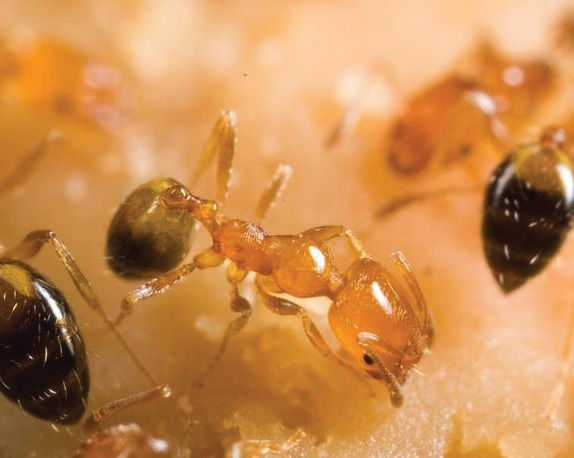
For homeowners and even many pest control professionals, field identification typically begins with broad categorisations based on readily observable features such as colour (black versus brown), approximate size, and general behaviour.[2] While this approach provides a starting point, it often fails to distinguish between species with similar appearances but significantly different biology and control requirements. For instance, several small brown ant species found in Australian buildings—including Argentine ants (Linepithema humile), Singapore ants (Monomorium destructor), and Pharaoh ants (Monomorium pharaonis)—can be easily confused despite requiring quite different management strategies.[5]
 |  |  |
Recent advances in molecular techniques, particularly DNA barcoding using cytochrome c oxidase subunit I (COI) sequences, have provided powerful tools for accurate species identification. Research has demonstrated that DNA barcoding can successfully discriminate between ant species with a clear "barcode gap," showing mean intraspecific divergence of approximately 0.72% and average congeneric distance of 17.25%.[9] However, these sophisticated techniques remain beyond the reach of typical field identifications, highlighting the ongoing need for morphological identification skills combined with professional taxonomic expertise.
Do you need an inspection and ID for ants?
Contact us for a free inspection and quote.
0403-796-588
What Makes These Ants Pests?

Understanding why certain ant species become pests requires examining both their biological characteristics and their interactions with human environments. Pest ants typically share several key attributes that distinguish them from their non-pest counterparts.
Food Contamination and Property Intrusion
The most common pest complaint involves ants invading homes and commercial premises in search of food and water. Their small size allows them to exploit tiny cracks and crevices, gaining access to buildings through gaps around pipes, electrical conduits, windows, and doors.[2] Once inside, foraging workers quickly locate food sources, establishing chemical trails that recruit hundreds or thousands of nestmates. The resulting contamination of food products renders them unsuitable for consumption and can lead to significant economic losses in commercial food operations.
Health Risks: Stings and Allergic Reactions

While most Australian pest ants pose minimal direct health risks, several species deliver painful and potentially dangerous stings. Bull ants (Myrmecia species), green-head ants (Rhytidoponera metallica), and particularly red imported fire ants (Solenopsis invicta) inject venom that can cause severe local reactions, persistent itching, and in some individuals, life-threatening anaphylactic shock.[2,10] The Australian Museum reports that several deaths have occurred from bull ant stings, while fire ants cause an estimated one to two deaths annually in the United States where they are well established.[10]
Structural and Electrical Damage

Several ant species cause direct property damage beyond simple contamination. Coastal brown ants (Pheidole megacephala) and funnel ants (Aphaenogaster species) excavate soil beneath pavers and lawns, creating unsightly mounds and uneven surfaces that pose trip hazards and complicate lawn maintenance.[2] More seriously, certain species nest within wall voids and show attraction to electrical equipment, where their presence can cause short circuits and has been documented as a cause of house fires.[2]
Environmental and Agricultural Impacts
The most severe pest impacts come from invasive ant species that form enormous supercolonies capable of dominating entire landscapes. These species typically exhibit several key biological traits: omnivorous feeding habits allowing exploitation of diverse food sources, multi-queen colony structures enabling rapid population growth, and unusual inter-colony cooperation where nests that would normally compete instead work together.[11]

CSIRO research indicates that invasive ants can eliminate native species through direct predation and competition, seriously disrupt ecological processes, destroy agricultural crops directly or through promotion of sap-sucking insects, and render outdoor areas unusable through their aggressive defensive behaviour.[12] The National Invasive Ant Biosecurity Plan recognizes exotic invasive ants as the seventh most important National Priority Plant Pest, reflecting their serious threat to Australia's environmental, economic and social wellbeing.[13]
Do you need an inspection and ID for ants?
Contact us for a free inspection and quote.
0403-796-588
Common Ant Species In Australia
Argentine Ant (Linepithema humile)
Identification and Distribution
The Argentine ant is a small, light to medium brown ant measuring 2-3 millimetres in length. Workers display a relatively uniform appearance across the colony without distinct soldier castes. These ants move quickly in distinctive trails and emit a musty odour when crushed.[2] Native to South America, Argentine ants were first recorded in Australia in 1858 and have since become established primarily in cooler southern regions, including parts of New South Wales, Victoria, South Australia, and Western Australia.[1,14]

Biology and Behaviour
Argentine ants exhibit a remarkable colony structure that makes them particularly successful invaders. Unlike most ant species where separate colonies maintain territorial boundaries and engage in aggressive interactions, Argentine ant nests from the same supercolony cooperate and share resources freely.[15] This allows them to form massive supercolonies potentially spanning hundreds of kilometres, with multiple queens and thousands of workers creating an interconnected network of nests.
These ants are strongly attracted to sweet substances and actively seek out honeydew-producing insects such as aphids, scales, and mealybugs, which they protect and tend much like farmers tending livestock.[2] This mutualistic relationship can lead to increased pest problems in gardens and agricultural settings, as the ants protect these sap-sucking insects from natural predators.
Why They're Pests
Argentine ants rank among the world's worst invasive species due to their ability to rapidly dominate areas and exclude native ant species through sheer force of numbers.[4] In residential settings, they invade homes in large numbers seeking sweet foods and moisture. Their supercolony structure makes conventional pest control extremely challenging—even when colonies are eliminated from a property, reinvasion from surrounding populations occurs rapidly. In gardens and agricultural areas, their protection of honeydew-producing insects can lead to increased plant damage and reduced crop yields. Ecologically, Argentine ants have been shown to displace native ants and disrupt pollination services, with research indicating their presence on Norfolk Island threatens to decimate most of the island's insect fauna, including critical pollinators.[16]
Do you need an inspection and ID for ants?
Contact us for a free inspection and quote.
0403-796-588
Big-Headed Ant / Coastal Brown Ant (Pheidole megacephala)

Identification and Distribution

The coastal brown ant, also known as the big-headed ant or African big-headed ant, is a small light ginger-brown ant with a shiny dark brown abdomen. The species exhibits distinct worker polymorphism, with two size classes readily apparent: numerous small workers (2-3 millimetres) and a smaller number of soldiers (3.5-4.5 millimetres) with disproportionately large heads, from which the species derives its common name.[2,17] These ants are widespread along Australia's eastern coast and are common in urban areas throughout northern Australia and around Perth.[17]
Biology and Behaviour
Coastal brown ants construct their nests in soil, commonly establishing colonies beneath lawns and paving. Their excavation activities create characteristic lines of interconnected holes and small mounds of displaced soil.[17] Unlike many pest ant species that prefer sugars, coastal brown ants show a preference for protein and fat-based foods, which influences their foraging behaviour and the types of baits most effective for their control.[2]

The species forms multi-queen, multi-nest colonies that can spread over large areas, with individual nests maintaining connectivity through foraging networks. This colony structure allows rapid population expansion and makes complete eradication from an area extremely difficult.
Why They're Pests
Coastal brown ants create several significant problems. Their soil excavation beneath pavers causes subsidence and displacement of paving materials, creating uneven surfaces and aesthetic issues. When populations are high outdoors, workers readily enter buildings in search of food, particularly fats and oils. The species' preference for pet food makes outdoor feeding areas particularly attractive to foraging workers.[17]
As one of the world's 100 worst invasive species, coastal brown ants pose serious environmental threats beyond their nuisance value.[4] They are extremely aggressive toward other ant species and can rapidly exclude native ants from infested areas, disrupting ecosystem functioning. Research has documented their impacts on Christmas Island and Lord Howe Island, where eradication programs have been necessary to protect endemic biodiversity.[12]
Do you need an inspection and ID for ants?
Contact us for a free inspection and quote.
0403-796-588
Black House Ant (Ochetellus glaber)

Identification and Distribution
The black house ant is one of Australia's most commonly encountered pest species. Workers measure 2-3 millimetres in length and range in colour from black to dark brown, with a slender body and distinct segmented appearance.[18] The species is found throughout mainland Australia and Tasmania, thriving in both urban and rural environments.[2]

Biology and Behaviour
Black house ants typically nest outdoors in soil, under stones, along pathways, and in garden beds, though they readily establish nests within wall cavities and roof voids when conditions are favourable.[2,19] Colonies contain a single queen and can house several thousand workers. The species exhibits strong foraging behaviour, with workers establishing well-defined trails to food sources that can extend considerable distances from the nest.
These ants are particularly attracted to sweet substances and show a strong preference for honeydew produced by sap-sucking insects. Like many ant species, they maintain mutualistic relationships with aphids and scale insects, protecting these pests in exchange for their sugary secretions.[2]
Why They're Pests
Despite being a native species, black house ants frequently become household pests when they enter buildings in search of food and water. Their small size allows them to exploit minute cracks and gaps, and once workers discover a food source, their trail-laying behaviour quickly brings large numbers into the home. They contaminate food products and can establish satellite nests within wall voids if conditions support colony expansion. While they do not sting and their bite is relatively minor, their persistent presence and large numbers make them a significant nuisance pest.[2,18]
Do you need an inspection and ID for ants?
Contact us for a free inspection and quote.
0403-796-588
Funnel Ant (Aphaenogaster species)

Identification and Distribution
Funnel ants are medium-sized brown ants measuring 4-6 millimetres in length. The most distinctive feature of this species is not the ants themselves but their characteristic nest structures—cone-shaped funnels of excavated soil that dot lawns and grassy areas.[2] Multiple Aphaenogaster species create these distinctive nest entrances across Australia, with the genus being particularly common in New South Wales and other eastern states.

Biology and Behaviour
Funnel ants nest underground in lawns and grassy areas, with their excavation activities bringing subsoil to the surface where it forms the distinctive funnel-shaped mounds that mark nest entrances. These nests can be extensive underground, with chambers and galleries extending well below the surface. Workers forage primarily at night, feeding on seeds and small insects.[2]
Colonies are typically monogynous (single-queened) and can persist in the same location for many years if undisturbed, with new nest entrances appearing as the colony expands.
Why They're Pests
While funnel ants themselves pose no direct threat to humans or property, their nest building activities create significant problems for lawn and landscape management. Large infestations can produce hundreds of soil mounds across a lawn, creating highly unsightly conditions that can affect property values. The uneven surface created by numerous mounds poses trip hazards and makes mowing difficult, potentially damaging lawn equipment. In severe cases, the accumulation of subsoil on the surface can smother grass, creating dead patches.[2,19]
The species does not typically enter buildings and causes no structural damage, limiting their pest status primarily to aesthetic and lawn maintenance concerns. However, in areas with heavy infestations, these impacts can be substantial enough to warrant professional treatment.
Do you need an inspection and ID for ants?
Contact us for a free inspection and quote.
0403-796-588
Green-Head Ant (Rhytidoponera metallica)

Identification and Distribution
The green-head ant is easily recognised by its distinctive metallic green or purple-tinged head, contrasting with its black body. Workers measure 5-6 millimetres in length and possess large eyes and well-developed mandibles.[2] This native species is found throughout southeastern Australia and is particularly common in urban lawns and parks in New South Wales, Victoria, and South Australia.[2,20]

Biology and Behaviour
Green-head ants nest in soil, commonly establishing colonies in lawns, under rocks, logs, and along pathways. Each colony typically consists of several interconnected nests in close proximity, and there may be multiple colonies within a single lawn area. The species is diurnal, with workers foraging primarily on sunny days when temperatures are favourable.[19]

These ants are predatory, feeding primarily on other insects, though workers also collect nectar and other plant secretions. The species shows typical ant social organisation with queen, worker, and reproductive castes, and colonies can persist for many years in suitable locations.

Why They're Pests
Green-head ants earn their pest status primarily through their defensive behaviour and painful sting. While they generally ignore humans unless their nest is disturbed, they can deliver a moderately painful sting that produces burning sensations and persistent itching lasting several days.[2] For some individuals, stings can trigger allergic reactions requiring medical attention, though severe anaphylaxis is less common than with bull ants or fire ants.
The species' preference for nesting in lawns brings them into frequent contact with humans during gardening, lawn care, and recreational activities. Children playing in yards and people walking barefoot on grass are particularly at risk of disturbing nests and receiving multiple stings. In areas with dense populations, their presence can effectively render outdoor areas unusable, particularly for young children and individuals with known ant sting allergies.[2,10]
Do you need an inspection and ID for ants?
Contact us for a free inspection and quote.
0403-796-588
Pharaoh Ant (Monomorium pharaonis)
 | |
Identification and Distribution
Pharaoh ants are among the smallest pest ant species, with workers measuring only 1.5-2 millimetres in length. They are pale yellow to light brown in colour with a darker abdomen, and their minute size makes them difficult to observe in detail without magnification.[2] This tropical species is found in heated buildings throughout Australia, particularly in hospitals, hotels, and multi-unit residential buildings where warmth and food sources are consistently available.[2]

Biology and Behaviour
Pharaoh ants exhibit a highly fragmented colony structure known as "budding" or "satelliting," where new colonies are formed when queens, workers, and brood move to establish separate but cooperative nests. This results in supercolonies composed of numerous interconnected nests that can spread throughout large buildings.[2] The species requires warmth to thrive and cannot survive outdoors in temperate regions, restricting them to heated structures.
These ants feed on a wide variety of foods including sweets, proteins, and fats, and are capable of surviving on remarkably small food sources. They show unusual persistence in exploring and exploiting their environment, accessing food through incredibly small openings.

Why They're Pests
Pharaoh ants are particularly problematic in healthcare facilities where they have been documented transmitting pathogenic bacteria including Staphylococcus, Salmonella, and Pseudomonas species.[2] Their small size allows them to contaminate sterile equipment and wound dressings, while their ability to access intravenous lines poses direct patient risks.
The species' budding behaviour makes them extraordinarily difficult to control. Conventional insecticide sprays, rather than eliminating the problem, typically cause colony fragmentation, with budding behaviour spreading the infestation to new areas. This can actually worsen an outbreak rather than resolving it. Successful control requires patient application of specific baits over extended periods and cannot rely on repellent sprays.[2]
Do you need an inspection and ID for ants?
Contact us for a free inspection and quote.
0403-796-588
Red Imported Fire Ant (Solenopsis invicta)

Identification and Distribution
Red imported fire ants are small, reddish-brown to copper-coloured ants with workers ranging from 2-6 millimetres in length, displaying pronounced size polymorphism within colonies.[2] Native to South America, fire ants were first detected in Brisbane in 2001 and have since spread through parts of southeast Queensland and into northern New South Wales despite intensive eradication efforts.[2,21] New detections continue to occur, with a significant infestation discovered in Port Botany, Sydney, and ongoing finds in the Brisbane region.[1,21]

Biology and Behaviour
Fire ants construct distinctive dome-shaped mounds in open, sunny areas including lawns, parks, agricultural fields, and along roadsides. Nests can reach 40 centimetres in height and 60 centimetres in diameter, though many nests have no visible mound.[22] When disturbed, fire ants exhibit highly aggressive defensive behaviour, with hundreds of workers rapidly swarming from the nest to attack the perceived threat.
The species forms multi-queen colonies that can contain over 200,000 workers, and multiple colonies in an area often cooperate rather than compete, creating functional supercolonies. Fire ants are opportunistic omnivores, feeding on seeds, plant materials, and other insects, with workers actively hunting live prey including small vertebrates unable to escape.[2]

Why They're Pests
Fire ants are considered one of the world's most dangerous invasive species, earning their ranking among the global top 100 worst invaders.[4] Their aggressive behaviour and venomous sting create serious health risks—when defending their nest, multiple workers simultaneously sting victims, injecting venom that causes immediate burning pain followed by the development of characteristic pustules. For sensitive individuals, fire ant stings can trigger severe allergic reactions including anaphylactic shock, with an estimated 0.5-2% of sting victims experiencing serious medical emergencies.[2] While no fire ant deaths have yet been recorded in Australia, one to two deaths occur annually in the United States where the species is widely established.[2]
Beyond direct health impacts, fire ants pose enormous environmental and economic threats. Research indicates that if fire ants become widely established in Australia, they could cost the economy over $2 billion annually through agricultural losses, infrastructure damage, and control costs.[23] Ecologically, fire ants eliminate or drastically reduce native ant populations and other ground-dwelling invertebrates, fundamentally altering ecosystem structure and function. The Invasive Species Council notes that fire ants can turn bustling bushland silent by eliminating the diverse fauna that typically inhabits these areas.[23]

The National Fire Ant Eradication Program represents one of Australia's largest biosecurity efforts, with over $280 million spent since 2001 attempting to eliminate the species before it spreads beyond containment.[24] The Department of Primary Industries New South Wales maintains an active surveillance and response program, urging anyone who suspects they have found fire ants to report them immediately rather than attempting control themselves, as inappropriate treatment can cause colony fragmentation and accelerated spread.[22]
Do you need an inspection and ID for ants?
Contact us for a free inspection and quote.
0403-796-588
Singapore Ant (Monomorium destructor)

Identification and Distribution
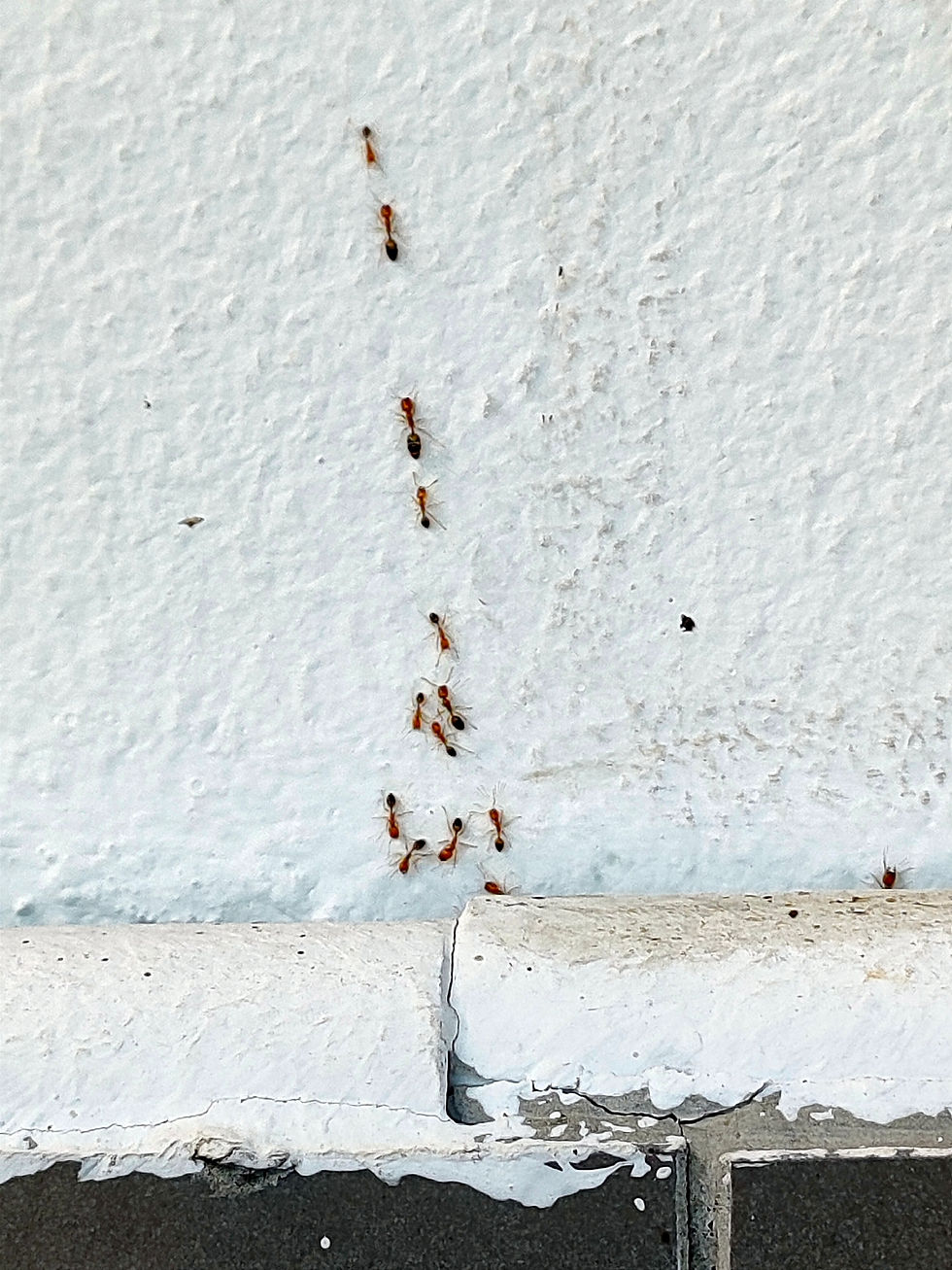
Singapore ants are very small pale brown ants measuring approximately 2 millimetres in length. Their minute size and pale colouration can make them difficult to spot, particularly against light-coloured surfaces.[2] This introduced tropical species has become established in parts of Queensland and New South Wales, particularly in the northern regions.[2]

Biology and Behaviour
Like their relative the Pharaoh ant, Singapore ants form multi-queen colonies with a tendency to fragment and bud when disturbed. They nest in small spaces including wall voids, beneath flooring, and in other concealed locations within structures. The species prefers high-moisture environments and is commonly found in kitchens, bathrooms, and other areas where humidity is elevated.[2]
Workers feed on a variety of foods but show particular attraction to proteins and greasy substances. They can establish trails both indoors and outdoors, connecting multiple nest sites across considerable distances.
Why They're Pests
Singapore ants primarily cause problems in residential and commercial buildings where they contaminate food products and are difficult to eradicate due to their cryptic nesting habits. Their small size allows them to access stored products through packaging that would exclude larger ant species. The name "destructor" reflects their destructive potential in certain situations, though they are generally less serious pests than Pharaoh ants or some other invasive species.[2]
Like Pharaoh ants, Singapore ants respond poorly to repellent insecticide sprays, which can cause colony fragmentation and worsen infestations. Successful control requires identification of the species and use of appropriate slow-acting baits that allow workers to transport toxicant back to nests and queens before dying.[2]
Do you need an inspection and ID for ants?
Contact us for a free inspection and quote.
0403-796-588
Tyrant Ants (Iridomyrmex species)

Identification and Distribution
Tyrant ants (Iridomyrmex species) represent a diverse group of native Australian ants that includes numerous species, some of which occasionally become pests. These ants are typically dark in colour (black to dark brown) and medium-sized, measuring 3-5 millimetres in length. Workers move rapidly with a distinctive, somewhat erratic gait.[2] The genus Iridomyrmex is widespread throughout Australia, with different species occupying diverse habitats from coastal areas to arid inland regions.

Biology and Behaviour
Iridomyrmex species commonly nest in soil, under rocks, and in other ground-level locations. Many species are highly thermophilic, with activity levels closely tied to temperature and solar radiation. Workers often forage along well-defined trails during the warmest parts of the day. The genus includes the iconic meat ants (Iridomyrmex purpureus), which construct distinctive gravel mounds and are important components of Australian bushland ecosystems.[25]

Colonies can be quite large, containing thousands of workers, and these ants are generally aggressive in defending their territories and food sources. They feed opportunistically on honeydew from sap-sucking insects, nectar, seeds, and scavenged protein sources including dead insects.
Why They're Pests
While most Iridomyrmex species are not significant pests, some occasionally enter buildings when foraging, particularly during hot weather when they seek moisture or when outdoor food sources are limited. Their rapid movement and tendency to explore can make them conspicuous when they do enter structures, though they typically do not establish permanent indoor nests.[2]

In outdoor settings, some species' aggressive territorial behaviour and propensity to bite (though they lack stings) can make them problematic in parks and recreational areas. However, their ecological importance as predators and seed dispersers generally outweighs their occasional pest status, and many species play beneficial roles in controlling other insect populations.
Do you need an inspection and ID for ants?
Contact us for a free inspection and quote.
0403-796-588
White-Footed House Ant (Technomyrmex Species)

Identification and Distribution

The white-footed house ant is a small black ant measuring 2.5-3 millimetres in length, distinguished by its pale yellowish-white feet (tarsi), from which it derives its common name.
This introduced species has become established in tropical and subtropical regions of Australia, particularly in Queensland and northern New South Wales, though its range is expanding southward.[2]
Biology and Behaviour
White-footed house ants form extremely large, multi-queen, multi-nest colonies that can contain hundreds of thousands or even millions of workers distributed across numerous interconnected nests. This supercolony structure allows them to dominate areas where they become established.[2,26] Nests are located both indoors and outdoors in a wide variety of situations including wall voids, roof spaces, beneath bark, in pot plants, and under debris.
Unlike many pest ants, white-footed house ants show little interest in common protein or sugar baits, preferring to feed on honeydew produced by sap-sucking insects. Workers tend aphids, scale insects, and mealybugs intensively, creating a mutualistic relationship that can lead to severe pest problems in gardens and agricultural settings.[2]
Why They're Pests
White-footed house ants rank among the most difficult pest ants to control due to their enormous colony sizes and unusual feeding preferences. When populations build to high levels, workers trail in massive numbers inside buildings, creating an intense nuisance despite not biting or stinging. Their sheer abundance and persistent activity make infested properties nearly unbearable for occupants.[2,26]

In outdoor environments, their intensive farming of honeydew-producing insects causes significant damage to ornamental plants and can result in crop losses in agricultural settings. The accumulation of honeydew and subsequent growth of sooty moulds on plant surfaces further reduces plant vigor and aesthetic appeal.[2]
The species' poor response to conventional protein and sugar baits necessitates integrated management approaches often requiring professional intervention with specialised non-repellent insecticides. Even with professional treatment, complete elimination can be extremely difficult, and repeated treatments over extended periods are often necessary.[2,26]
Do you need an inspection and ID for ants?
Contact us for a free inspection and quote.
0403-796-588
Carpenter Ants (Camponotus species)

Identification and Distribution
Carpenter ants are among Australia's largest ant species, with workers ranging from 3-13 millimetres in length⁽²⁷⁾, though some major workers can reach up to 14 millimetres. They are typically black, dark brown, or brownish-orange in colour⁽²⁸⁾, with an evenly rounded thorax profile when viewed from the side⁽²⁹⁾.

Several native Camponotus species occur throughout Australia, with common species including Camponotus consobrinus (banded sugar ant)⁽³⁰⁾ and Camponotus nigriceps (black-headed sugar ant)⁽³¹⁾. These ants are found across all Australian states⁽²⁸⁾, adapting to environments ranging from dry sclerophyll woodland to eucalyptus forests⁽³¹⁾.

Biology and Behaviour
Carpenter ants establish colonies by excavating galleries within wood using their mandibles, though unlike termites, they do not consume the wood itself but discard it as sawdust-like material⁽²⁹⁾. Colonies typically contain a single queen and mature colonies contain 2,000-3,000 workers⁽³²⁾, with a new colony requiring three to six years to fully mature⁽³²⁾.

These ants are primarily nocturnal foragers, becoming most active after sunset⁽²⁸,³³⁾. Workers can travel more than 100 yards (approximately 90 metres) along established trails to locate food sources⁽³⁴⁾. Their diet consists of sugary liquids like honeydew and sweet secretions from bugs such as aphids, which they tend on plants, as well as fluids and body parts of dead insects⁽²⁸⁾. Carpenter ants are attracted to moisture-damaged or decaying wood, which is softer and easier to excavate⁽²⁹,³²⁾.
Why They're Pests


Carpenter ants can weaken the fabric of a property over time through their tunnelling activities, though unlike termites, their damage progresses more slowly⁽²⁸⁾. They prefer to nest in damp, decayed wood, often in roof spaces, wall cavities, and poorly ventilated areas⁽³²⁾. Homeowners may notice piles of sawdust-like frass beneath exit holes or hear faint rustling sounds within walls during quiet evening hours⁽³³,³⁵⁾.
The presence of carpenter ants often indicates underlying moisture problems within a structure. Carpenter ants can deliver a painful bite when disturbed, and some species inject formic acid when biting, which may cause a burning sensation⁽³⁶⁾.
Control can be challenging because ants usually establish multiple satellite nests, and the main nest may be located outdoors in trees or stumps while satellite nests exist inside buildings⁽³⁴⁾.
Experienced a sting?
Contact us for a free inspection and quote.
0403-796-588
Bull Ants (Myrmecia species)

Identification and Distribution
Bull ants, also known as bulldog ants, are among Australia's largest ants, characterised by long, lean bodies, big eyes and huge, powerful, forward-pointing mandibles⁽³⁷⁾. Sizes range from 8-40 millimetres in length depending on species⁽³⁷,³⁸⁾, with Myrmecia gulosa reaching 15-30 millimetres⁽³⁹⁾.

They display considerable colour variation depending on species, ranging from black to red, orange, or combinations. At least 93 species of Myrmecia are found throughout Australia and its coastal islands, while a single species is only known from New Caledonia⁽⁴⁰⁾. They are found right across the mainland and in Tasmania but are most common in the country's south-east⁽³⁷⁾.
Biology and Behaviour
Bull ants are unusual among ants in their reliance on vision rather than chemical senses for navigation, with excellent eyesight capable of spotting and responding to intruders up to one metre away⁽³⁷⁾. Workers are solitary hunters with highly developed vision who forage on the ground⁽³⁷⁾. Adult ants eat mostly nectar and sweet sticky honeydew excreted onto leaves by various insects, but ant larvae are carnivorous and eat small insects captured and brought back by worker ants⁽³⁷⁾.
Colonies are typically small by ant standards, containing between 500 and 3,000 individuals⁽³⁸,⁴¹⁾ in subterranean nests that often have only a small opening but can spread for many metres underground⁽³⁷⁾.

They nest outdoors in soil or under logs or rocks, building extensive tunnel systems, and are seldom seen inside buildings⁽⁴²⁾. Bull ants are characterised by their extreme aggressiveness and ferocity, with some species known for the jumping behaviour they exhibit when agitated⁽⁴⁰⁾. They are fiercely territorial and will aggressively defend their nests, pursuing intruders for considerable distances.
Why They're Pests
Bull ants possess long, powerful serrated mandibles and a venom-laced sting capable of causing severe pain for a couple of days⁽³⁹⁾. They attack by gripping with their mandibles and delivering venom through a prominent sting, often attacking repeatedly while maintaining their mandibular grip⁽³⁷⁾. The sting causes immediate intense burning pain, followed by localised swelling, redness, and discomfort.

More seriously, in Tasmania, approximately 2.7% (or 3%) of the population have developed allergies to jack jumper ant (Myrmecia pilosula) venom, and about half of these allergic people can suffer anaphylactic reactions⁽⁴³,⁴⁴⁾.
Between 1980 and 1999, four deaths were attributed to jack jumper ant stings in Tasmania, all males aged 40 years or over with significant comorbidities⁽⁴⁵,⁴⁶⁾. Anaphylaxis from stinging insect allergy results in an average of three deaths per year in Australia⁽⁴⁷⁾.
Unlike many ant species that retreat when disturbed, bull ants actively pursue and attack perceived threats⁽⁴⁰⁾, making encounters particularly problematic for gardeners, children playing outdoors, and bushwalkers.
Their nests in lawns, gardens, parks, and bushland create hazards in recreational areas. Those at greatest risk of anaphylaxis are those who have had anaphylaxis following a sting before, with older adults and those with existing lung or heart disease being at highest risk of severe outcomes⁽⁴⁷⁾.
Looking for further advice? Contact us for a free inspection and quote.
What This Means For Pest Control in Port Macquarie
Australia's ant fauna represents a remarkable example of evolutionary diversity, with over 1,275 described species filling ecological niches from tropical rainforests to arid deserts. Yet this diversity presents significant challenges when a handful of species—both native and introduced—bring them into conflict with human interests. The identification and management of pest ants requires understanding not only their taxonomy and morphology but also their complex social biology, colony structures, and behavioral ecology.

The difficulties inherent in ant identification stem from multiple factors: the insects' small size requiring magnification for accurate assessment, the subtle morphological features used to distinguish closely related species, the presence of polymorphic castes within colonies, and the sheer diversity of species with superficially similar appearances.
Recent advances in molecular techniques have provided powerful tools for species-level identification, yet morphological expertise remains essential for field identifications and rapid assessment of pest problems.[6,9]
What makes these species pests varies considerably. Some, like black house ants and tyrant ants, are primarily nuisance species whose pest status arises simply from their abundance and tendency to enter human structures. Others, such as green-head ants and fire ants, pose direct health threats through painful and potentially dangerous stings. Structural and agricultural pests like coastal brown ants and white-footed house ants cause economic damage through their nesting activities and mutualistic relationships with plant pests. Most seriously, invasive species including Argentine ants, fire ants, and yellow crazy ants represent existential threats to Australia's unique biodiversity and ecosystem functioning.
The challenge of controlling pest ants lies in their social organisation. Unlike solitary pests that can be eliminated individually, ant colonies function as superorganisms with queens continuously replacing lost workers. Effective control must target entire colony structures, either through direct nest destruction when nests can be located or through carefully formulated baits that workers transport back to nests to eliminate queens and brood. The rise of invasive species with multi-queen, multi-nest supercolonies has made this challenge even more daunting, requiring sustained, area-wide management efforts rather than simple property-level treatments.

Looking forward, the increasing globalisation of trade and climate change's effects on species distributions suggest that ant pest problems will continue to evolve. New invasive species detections occur regularly, requiring rapid response to prevent establishment. The National Invasive Ant Biosecurity Plan recognises these threats, outlining coordinated approaches to prevention, early detection, and eradication efforts.[13] Success in managing Australia's pest ant challenges will require continued investment in biosecurity infrastructure, taxonomic expertise, and research into innovative control technologies, combined with public education to enable early reporting of unusual ant activity.

For homeowners and property managers dealing with ant problems, the key lessons are clear: accurate identification is the essential first step in effective management, different species require different control approaches, and professional assistance is often necessary for successful elimination of established infestations. By understanding the biology and behaviour of these remarkable yet problematic insects, we can develop more effective strategies for coexisting with the beneficial members of Australia's ant fauna while managing those species that truly warrant the designation of pests.
Looking for further advice? Contact us for a free inspection and quote.
Frequently Asked Questions About Pest Ants in Australia
What is the most dangerous ant in Australia?
The Red Imported Fire Ant (Solenopsis invicta) is considered the most dangerous ant in Australia.
Fire ants deliver extremely painful stings that can cause severe allergic reactions, including potentially life-threatening anaphylactic shock in sensitive individuals. Their aggressive defensive behaviour means multiple stings are common, and they've caused deaths in the United States where they're widely established.
Bull ants (Myrmecia species) are also highly dangerous, particularly the jack jumper ant in Tasmania, which has caused four documented deaths and triggers allergic reactions in approximately 3% of Tasmania's population. Both species require immediate medical attention if severe reactions occur.
If you suspect you've found fire ants, do not attempt to control them yourself. Contact the National Fire Ant Eradication Program immediately at 13 25 23 or your local pest control authority.
How can I tell what type of ant is in my home?
Identifying ant species requires observing several key characteristics:
Size: Measure workers (2mm = very small, 5mm = medium, 10mm+ = large)
2. Colour: Note the body colour and any distinctive markings (e.g., green metallic head, pale feet, banded abdomen)
Location & Behaviour:
Where are they nesting? (soil, wood, wall cavities)
When are they active? (day/night)
What are they attracted to? (sweets, proteins, moisture)
Speed of movement: Some species move rapidly and erratically, others slowly
Trail patterns: Do they form organized trails or forage individually?
Due to the difficulty of accurate identification and the presence of look-alike species, professional identification is often necessary, especially if you're dealing with a persistent infestation.
Take clear photos of the ants (including close-ups if possible) and note their behaviour to share with a pest control professional.
In Port Macquarie, contact NatureWise Pest Control at 0403 796 588 for expert identification and treatment.
When should I call a professional for ant control?
You should call a professional pest controller when:
Immediate Professional Help Required:
You suspect fire ants (reddish-brown, aggressive, dome-shaped mounds) - this is a biosecurity emergency
You're experiencing allergic reactions to ant stings
Ants are present in healthcare facilities, restaurants, or food preparation areas
You find ants in electrical equipment or notice unusual electrical issues
Professional Help Strongly Recommended:
DIY treatments have failed after 2-3 weeks
The infestation is large or widespread (multiple nests, thousands of ants)
You've identified species that are difficult to control (Pharaoh ants, Singapore ants, white-footed house ants, Argentine ants)
Ants are causing structural damage (carpenter ants, coastal brown ants under pavers)
You're dealing with stinging species in areas used by children or pets (green-head ants, bull ants)
The nest cannot be located but ant activity continues
DIY May Be Appropriate For:
Small numbers of common species (black house ants)
Recently appeared, not yet established
Outdoor-only activity away from structures
Professional pest controllers have access to specialized products and techniques unavailable to homeowners, and can accurately identify species to ensure the correct treatment approach.
In Port Macquarie, contact NatureWise Pest Control at 0403 796 588 for expert identification and treatment.
Are all black ants the same species?
No - this is a common misconception.
Many different ant species appear black or dark brown, and they require different control approaches.
Common Black/Dark Ants in Australia:
Black House Ant (Ochetellus glaber)
Size: 2-3mm, slender
Most common indoor black ant
Prefers sweets
Tyrant Ants (Iridomyrmex species)
Size: 3-5mm, rapid movement
Native species, various types
Usually outdoor nesters
Bull Ants (Myrmecia species)
Size: 8-40mm, LARGE
Prominent eyes and mandibles
Dangerous sting - not to be confused with smaller black ants!
Carpenter Ants (Camponotus species)
Size: 3-13mm, variable
Nest in wood
Can cause structural damage
White-Footed House Ant (Technomyrmex species)
Size: 2.5-3mm, black body
Distinguished by pale yellowish feet
Forms massive colonies
Why Species Identification Matters:
Different baiting preferences (protein vs sugar)
Different nesting habits (requiring different treatment locations)
Different control challenges (some species "bud" when sprayed, making the problem worse)
Different risk levels (nuisance vs structural damage vs health threat)
Never assume all black ants are the same. What works for black house ants may worsen an infestation of Pharaoh ants or Singapore ants. In Port Macquarie, contact NatureWise Pest Control at 0403 796 588 for expert identification and treatment.
References
Australian Ant, Bee and Wasp Fauna. List of ants of Australia. Wikipedia. Available from: https://en.wikipedia.org/wiki/List_of_ants_of_Australia
Professional Pest Manager. Pest Ants in Australia. Professional Pest Manager; 2024. Available from: https://professionalpestmanager.com/ants/
Australian Museum. Ants: Family Formicidae. Sydney: Australian Museum; 2024. Available from: https://australian.museum/learn/animals/insects/ants-family-formicidae/
Hoffmann B. Invasive ants: Threatening Australian wildlife. Invasive Species Council. Available from: https://invasives.org.au/our-work/invasive-insects/ants/
Professional Pest Manager. In Focus: Small brown ants inside buildings. Prof Pest Manag Mag. 2022. Available from: https://professionalpestmanager.com/pest-control-ants/in-focus-small-brown-ants-inside-buildings/
Ward PS. Phylogeny, classification, and species-level taxonomy of ants (Hymenoptera: Formicidae). Zootaxa. 2007;1668:549-563.
Serna F, Mackay W. A descriptive morphology of the ant genus Procryptocerus (Hymenoptera: Formicidae). J Insect Sci. 2010;10(111):1-53.
Hita Garcia F, Fischer G, Liu C, Audisio TL, Economo EP. X-Ray microtomography for ant taxonomy: An exploration and case study with two new Terataner (Hymenoptera, Formicidae, Myrmicinae) species from Madagascar. PLoS ONE. 2017;12(3):e0172641.
Hanisch PE, Lavinia PD, Suarez A, Pearcy M, Leponce M, Calcaterra L, et al. Mind the gap! Integrating taxonomic approaches to assess ant diversity at the southern extreme of the Atlantic Forest. Ecol Evol. 2017;7:10451-10466.
Australian Museum. Bull ants. Sydney: Australian Museum; 2024. Available from: https://australian.museum/learn/animals/insects/bull-ants/
Abbott KL. Supercolonies of the invasive yellow crazy ant, Anoplolepis gracilipes, on an oceanic island: Forager activity patterns, density and biomass. Insectes Soc. 2006;53:307-315.
Hoffmann BD, Abbott KL, Davis P. Invasive ant management. In: Ant Ecology. Oxford: Oxford University Press; 2010. p. 287-304.
National Biosecurity Committee. National Invasive Ant Biosecurity Plan 2018-2028. Canberra: Australian Government; 2018.
Suarez AV, Holway DA, Case TJ. Patterns of spread in biological invasions dominated by long-distance jump dispersal: Insights from Argentine ants. Proc Natl Acad Sci USA. 2001;98(3):1095-1100.
Tsutsui ND, Suarez AV, Holway DA, Case TJ. Reduced genetic variation and the success of an invasive species. Proc Natl Acad Sci USA. 2000;97(11):5948-5953.
Krushelnycky PD, Loope LL, Reimer NJ. The ecology, policy, and management of ants in Hawaii. Proc Hawaiian Entomol Soc. 2005;37:1-25.
Hoffmann BD, O'Connor S. Eradication of two exotic ants from Kakadu National Park. Ecol Manag Restor. 2004;5:98-105.
Professional Pest Manager. Black house ant (Ochetellus glaber). Prof Pest Manag. 2024. Available from: https://professionalpestmanager.com/ants/black-house-ant/
Urban Entomology Research Laboratory. Household ants of NSW. Sydney: Westmead Scientific Services; 2010.
Shattuck SO. Australian Ants: Their Biology and Identification. Collingwood: CSIRO Publishing; 1999.
Queensland Government. Fire ant surveillance results. Brisbane: Department of Agriculture and Fisheries; 2024. Available from: https://www.daf.qld.gov.au/business-priorities/biosecurity/invasive-plants-animals/red-imported-fire-ants
NSW Department of Primary Industries. Red imported fire ant. Sydney: NSW DPI; 2024. Available from: https://www.dpi.nsw.gov.au/biosecurity/plant/insect-pests-and-plant-diseases/red-imported-fire-ant
Invasive Species Council. Fire ants. Melbourne: Invasive Species Council; 2024. Available from: https://invasives.org.au/our-work/invasive-insects/fire-ants/
National Fire Ant Eradication Program. Annual report 2022-2023. Brisbane: Queensland Government; 2023.
Andersen AN. Using ants as bioindicators: Multiscale issues in ant community ecology. Conserv Ecol. 1997;1(1):8.
Green PT, O'Dowd DJ, Lake PS. Resistance of island rainforest to invasion by alien plants: Influence of microhabitat and herbivory on seedling performance. Biol Invasions. 2004;6:1-9.
Victorian Government Health & Human Services. (n.d.). Ants - pest control. Retrieved from https://www.health.vic.gov.au/environmental-health/ants-pest-control
Competitive Pest Control. (2025). Ants Pest Control and Treatment. Retrieved from https://competitivepestcontrol.com.au/pests-we-treat/ants/
Envu Australia. (n.d.). Carpenter Ant - Pest Control. Retrieved from https://www.au.envu.com/pest-management/whattocontrol/carpenter-ant
Museums Victoria. (2010). Myrmecia Fabricius, 1804, Bull Ant. Collections. Retrieved from https://collections.museumsvictoria.com.au/species/8522
Wikipedia. (2025). Black-headed sugar ant. Retrieved from https://en.wikipedia.org/wiki/Black-headed_sugar_ant
A1 Pest Control. (2023). How to Get Rid of Carpenter Ants. Retrieved from https://www.a1pestcontrol.com.au/pest-control/carpenter-ants/
Fantastic Services Group. (2024). How to Get Rid of Carpenter Ants. Retrieved from https://fantasticservicesgroup.com.au/blog/how-to-get-rid-of-carpenter-ants/
Pest Control Sydney. (2023). Carpenter Pest Control Sydney. Retrieved from https://pestcontrolsydney.com.au/carpenter-ant/
Clean & Green Pest Control. (2022). How to Get Rid of Carpenter Ants: The Ultimate Guide. Retrieved from https://www.cleanandgreenpest.com.au/how-to-get-rid-of-carpenter-ants-the-ultimate-guide/
Tom's Pest Control Melbourne. (2024). Carpenter Ants Removal In Melbourne. Retrieved from https://www.tomspestcontrolmelbourne.com.au/ants-pest-library/carpenter-ant/
Australian Geographic. (2025). Fact File: Bull ant (Myrmecia spp.). Retrieved from https://www.australiangeographic.com.au/fact-file/fact-file-bull-ant-myrmecia-spp/
Australian Museum. (2024). Bull ants. Retrieved from https://australian.museum/learn/animals/insects/bull-ants/
Wikipedia. (2025). Myrmecia gulosa. Retrieved from https://en.wikipedia.org/wiki/Myrmecia_gulosa
Wikipedia. (2025). Myrmecia (ant). Retrieved from https://en.wikipedia.org/wiki/Myrmecia_(ant)
Blog Entomologist. (2025). Are Bulldog Ants The Only Australian Ant Species. Retrieved from https://blog.entomologist.net/are-bulldog-ants-the-only-australian-ant-species.html
EBSCO Research Starters. (2024). Bulldog ant. Retrieved from https://www.ebsco.com/research-starters/zoology/bulldog-ant
Brown, S. G., Franks, R. W., Baldo, B. A., & Heddle, R. J. (2003). Prevalence, severity, and natural history of jack jumper ant venom allergy in Tasmania. Journal of Allergy and Clinical Immunology, 111(1), 187-192. https://doi.org/10.1067/mai.2003.48
ASCIA. (n.d.). Jack Jumper Ant Allergy - a uniquely Australian problem. Australasian Society of Clinical Immunology and Allergy. Retrieved from https://www.allergy.org.au/hp/papers/jack-jumper-ant-allergy-a-uniquely-australian-problem
Brown, S. G., Wu, Q. X., Kelsall, G. R., Heddle, R. J., & Baldo, B. A. (2001). Fatal anaphylaxis following jack jumper ant sting in southern Tasmania. Medical Journal of Australia, 175(11-12), 644-647. Retrieved from https://pubmed.ncbi.nlm.nih.gov/11837875/
Wikipedia. (2025). Jack jumper ant. Retrieved from https://en.wikipedia.org/wiki/Jack_jumper_ant
ASCIA. (n.d.). Allergic Reactions to Bites and Stings. Australasian Society of Clinical Immunology and Allergy. Retrieved from https://www.allergy.org.au/patients/insect-allergy-bites-and-stings/allergic-reactions-to-bites-and-stings


Comments